
Primary keyword: farmer’s carry benefits
Some exercises are impressive because they are complicated. The farmer’s carry is effective for the opposite reason: pick up something heavy and walk.
That simplicity is exactly why it fits the Lean by Habit approach. You do not need a perfect program, an hour-long workout, or a new piece of equipment. You need a repeatable action that delivers a meaningful training signal and is easy enough to keep doing.
That matters right now. Functional fitness remains one of the American College of Sports Medicine’s major fitness trends for 2026, and current interest in healthy aging is pushing more people toward movements that build strength they can actually use in daily life. ACSM’s 2026 trend report specifically highlights functional fitness, traditional strength training, and fitness programs for older adults.
What is a farmer’s carry?
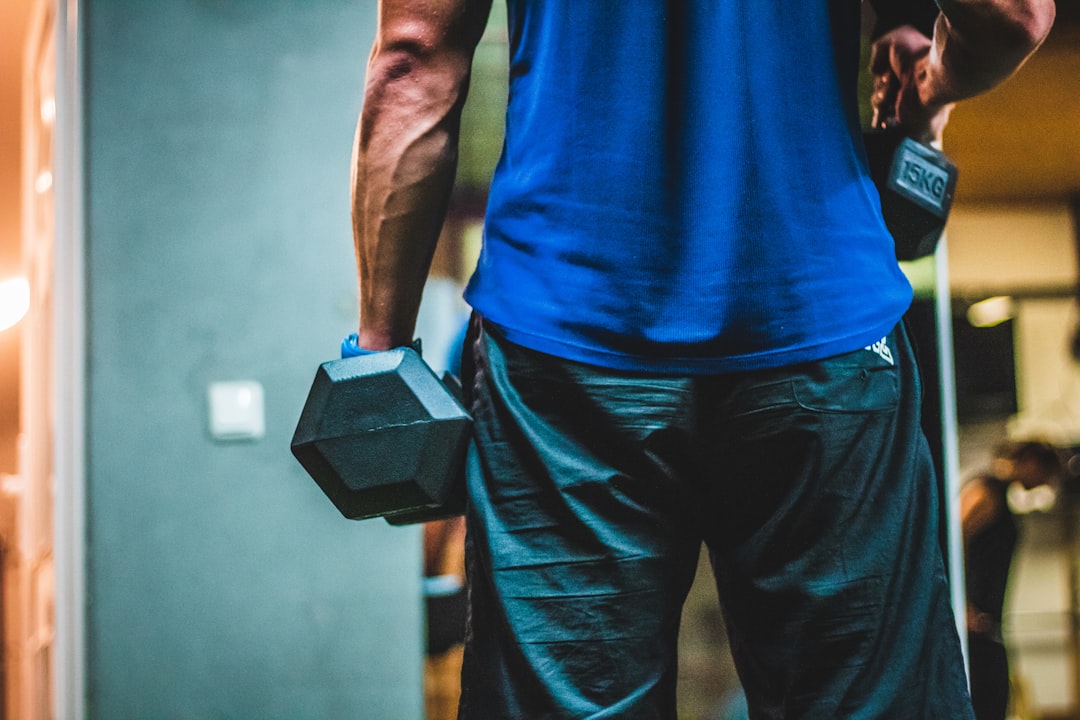
A farmer’s carry, also called a farmer’s walk, is a loaded carry performed by holding a weight in each hand and walking for a set distance or period of time. Dumbbells, kettlebells, loaded handles, or even heavy bags can work.
It looks simple because it is simple. But your grip, shoulders, upper back, trunk, hips, and legs all have to work together while you move under load.
In one sentence: the farmer’s carry is walking under load while maintaining posture, control, and a strong grip.
Why farmer’s carry benefits matter more after 40
Strength after 40 is not only about adding weight to a barbell. It is about maintaining the capacity to carry groceries, move luggage, lift objects, climb stairs, stabilize your torso, and stay physically capable as the years accumulate.
Loaded carries train several of those qualities simultaneously. The National Strength and Conditioning Association notes that loaded carries require coordinated trunk and hip stabilization and can be used to develop physical performance. A systematic review of strongman-style exercises also found that the farmer’s walk creates greater ground-reaction forces than unloaded walking and is commonly used to develop grip and total-body strength. NSCA overview | systematic review
1. Grip strength
Your hands are the first link in the chain. When the grip fails, the set ends. Carries therefore train grip strength and grip endurance without requiring a separate grip workout.
2. Core stability
The goal is not to twist, lean, or fold while walking. Your trunk has to resist movement while the rest of your body keeps moving. Think of it as a moving plank with weight in your hands.
3. Real-world strength
Carrying objects is one of the most basic physical tasks in everyday life. Farmer’s carries train exactly that capability.
4. Work capacity
A moderately heavy carry raises your heart rate quickly. That makes it a useful bridge between strength and conditioning without turning your workout into a complicated circuit.
5. Training efficiency
You can get a worthwhile training effect in minutes. That makes carries an ideal minimum-effective-dose movement for busy schedules.
The Lean by Habit advantage: make it too easy to skip
The mistake is thinking you need an elaborate loaded-carry program. You do not. You need a default.
Use this rule:
After your final strength exercise, perform three farmer’s carries before you leave.
That turns the carry into an anchor habit. The cue is already built into your workout: finish lifting, pick up the weights, walk.
This is the same logic behind the 2-Hour Strength Prescription: consistency beats unnecessary complexity. A modest amount of high-value work, repeated reliably, usually beats an ambitious plan you cannot sustain.
A simple 10-minute farmer’s carry workout
| Level | Work | Rest | Rounds |
|---|---|---|---|
| Beginner | 20–30 seconds | 60–90 seconds | 3 |
| Intermediate | 30–45 seconds | 60 seconds | 4 |
| Advanced | 40–60 seconds | 45–60 seconds | 4–5 |
Choose a load that feels challenging but still allows you to walk tall and controlled. Your posture should look almost boring: ribs stacked, shoulders controlled, eyes forward, short deliberate steps.
How heavy should farmer’s carries be?
There is no universal starting weight. Start lighter than your ego wants and increase gradually. The correct load is one you can carry without leaning, rushing, shortening your range of motion dramatically, or losing control.
If you are new to carries, start with a pair of dumbbells that you could hold comfortably for roughly 30 seconds. Once all rounds feel controlled, increase either the weight, distance, or duration. Change only one variable at a time.
Three useful farmer’s carry variations
Standard farmer’s carry
Hold equal weight in both hands. This is the best place to start and the easiest version to load progressively.
Suitcase carry
Carry weight in one hand only. Your trunk must resist bending toward the loaded side. Alternate sides evenly.
Front-rack carry
Hold kettlebells or dumbbells near the shoulders. This increases the demand on the upper back and trunk while typically requiring a lighter load.
Where farmer’s carries fit in a complete fitness plan
Farmer’s carries are useful, but they are not a replacement for everything else. Keep the basics: strength training, regular walking or cardiovascular work, adequate protein, sleep, and calorie control when fat loss is the goal.
If you already use walking as a foundational habit, see Rucking for Beginners. If your priority is sustainable body composition, start with How to Lose Body Fat After 40. And if you want a broader work-capacity framework, the Ultimate GPP Guide for Busy Professionals pairs naturally with loaded carries.
Farmer’s carry mistakes to avoid
- Going too heavy too soon. Load should challenge posture, not destroy it.
- Shrugging constantly. Keep the shoulders controlled rather than jammed toward your ears.
- Taking uncontrolled steps. Walk deliberately instead of racing.
- Turning every set into a max effort. Most training should leave room for repeatability.
- Adding too much volume. Start with three quality rounds and earn more work.
FAQ: farmer’s carry benefits
Are farmer’s carries good for people over 40?
Yes, when appropriately loaded and performed with good technique. They train grip, posture, trunk stability, and carrying capacity, all of which support everyday physical function.
Do farmer’s carries build muscle?
They can contribute to muscular development, particularly in the forearms, upper back, shoulders, and trunk, but they are best used as a complement to a complete resistance-training program.
Do farmer’s carries burn fat?
No single exercise directly causes meaningful fat loss by itself. Carries can increase energy expenditure and help preserve or build muscle, but sustainable fat loss still depends primarily on maintaining an appropriate calorie deficit over time.
How often should I do farmer’s carries?
For most recreational lifters, one to three short sessions per week is a practical starting point. Begin conservatively and adjust based on recovery and the rest of your training.
The takeaway
The farmer’s carry is a near-perfect Lean by Habit exercise because it is simple, scalable, and difficult to overthink.
Pick up the weights. Walk tall. Put them down. Repeat next week.
You do not need another complicated fitness strategy. You need a few high-value behaviors that survive busy weeks, travel, low motivation, and imperfect schedules. Make the carry one of them.
Action for this week: Add three controlled farmer’s carries to the end of your next two strength workouts. Keep the dose small enough that you will actually repeat it.
Featured photo: Domagoj Ćosić via Unsplash.

Leave a Reply