
Fitness culture has a predictable weakness: if some is good, we assume more must be better.
More sets. More exercises. More gym days. More recovery gadgets. More optimization.
But one of the most interesting fitness findings of 2026 points in a different direction.
A major study published in the British Journal of Sports Medicine followed 147,374 adults for up to 30 years. Researchers repeatedly assessed resistance training and aerobic exercise and examined their relationship with mortality.
The headline is encouraging: you may not need to live in the gym to capture substantial health benefits from strength training.
For health and longevity, roughly two hours of resistance training per week may take you surprisingly far.
That does not mean two hours is the perfect amount for everyone, and it certainly does not mean more training is harmful. But it does challenge a common assumption that increasingly large training volumes automatically produce increasingly large health returns.
It also arrives at the right moment. The American College of Sports Medicine lists traditional strength training among its top fitness trends for 2026, while programs for older adults rank second overall. Strength is increasingly being treated not merely as a way to look athletic, but as a cornerstone of healthy aging.
What the New Research Found
The 2026 study pooled participants from three large prospective cohorts: the Health Professionals Follow-up Study, Nurses’ Health Study, and Nurses’ Health Study II.
During follow-up, researchers documented 35,798 deaths.
After adjusting for aerobic activity and other factors, people reporting 90 to 119 minutes of resistance training per week had a 13% lower risk of all-cause mortality compared with people doing none.
They also had a 19% lower risk of cardiovascular mortality and a 27% lower risk of neurological-disease mortality.
Then came the particularly interesting finding: the all-cause mortality benefit appeared to level off around 120 minutes per week. The researchers did not observe additional mortality benefit at higher resistance-training durations.
This finding is observational, so it cannot prove that lifting weights directly caused the reduction in mortality. People who train may differ from people who do not in many ways, even after statistical adjustment.
But the result fits a broader body of research linking resistance exercise with better health outcomes.
Myth #1: If Two Hours Is Good, Four Hours Must Be Twice as Healthy
This is where fitness logic often fails.
Exercise has a dose-response relationship, but it is not necessarily linear.
The first hour you add to a sedentary lifestyle can produce a much larger improvement than the fifth or sixth hour you add to an already robust training program.
An earlier systematic review and meta-analysis found that any resistance training was associated with lower all-cause mortality, with the largest estimated reduction occurring around roughly an hour per week. The newer long-term study similarly suggests diminishing returns as training duration increases.
That does not mean training more than two hours per week is pointless.
More volume may be appropriate if your goal is maximizing muscle growth, strength, sports performance, bodybuilding, or simply because you enjoy training.
The important distinction is between training for maximum adaptation and training for substantial health benefit.
Those are not necessarily the same dose.
Myth #2: Cardio Is for Health; Weights Are for Appearance
This idea should be retired.
The World Health Organization recommends that adults perform muscle-strengthening activities involving all major muscle groups on at least two days each week, in addition to aerobic activity.
The new study strengthens the case for combining the two.
Participants who accumulated substantial aerobic activity and resistance training generally had among the lowest mortality risks.
That is a crucial point.
You do not have to choose between being strong and being aerobically fit.
A well-designed program should build both.
Why Strength Matters More as You Age
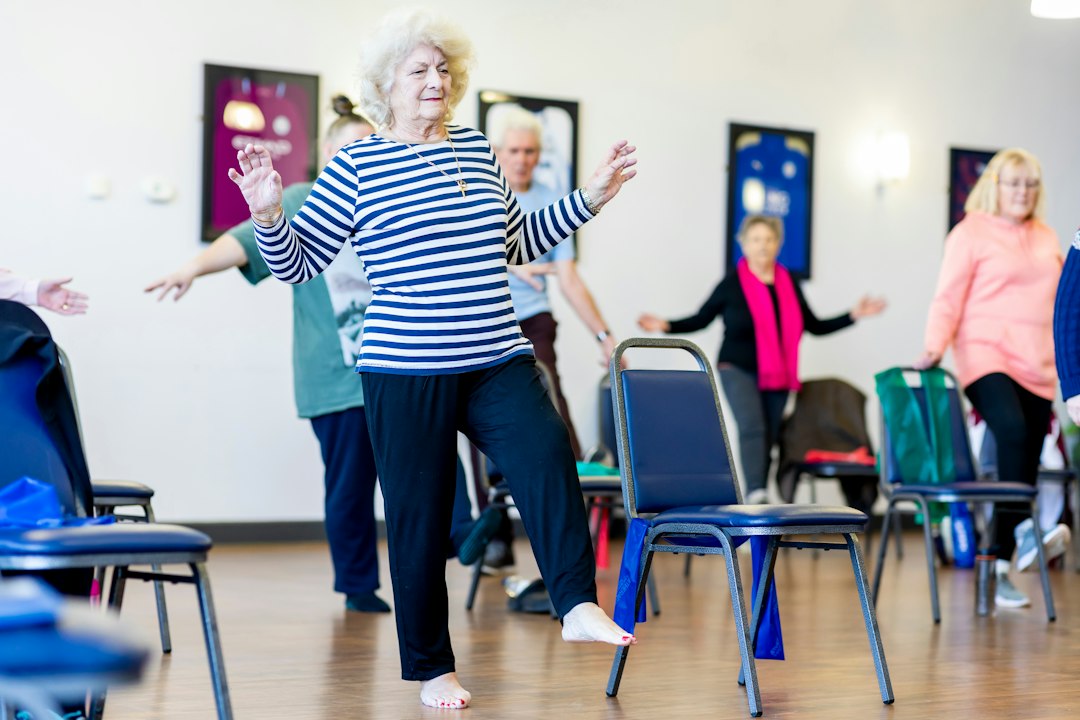
Strength training becomes increasingly valuable because aging tends to work against several physical qualities we want to preserve: muscle mass, strength, power, bone loading, balance, and the ability to perform everyday tasks independently.
This is one reason fitness programs for older adults rank so highly in the American College of Sports Medicine’s 2026 worldwide fitness trends. ACSM specifically highlights maintaining muscle mass, strength, balance, and mobility as priorities for active aging.
The goal is not merely to add years to life.
It is to preserve the physical capacity to use those years.
Can you carry luggage?
Get off the floor?
Lift something overhead?
Climb stairs without assistance?
Catch yourself when you stumble?
Continue traveling, working, playing sports, and doing the things you enjoy?
Those abilities depend on physical capacity, and resistance training is one of the most direct ways to build and preserve it.
The Minimum Effective Dose Is More Powerful Than It Sounds
People often hear “minimum effective dose” and interpret it as doing the least possible work.
That’s the wrong idea.
The better definition is:
Do enough work to create the adaptation you want without adding unnecessary work that makes consistency harder.
For someone who currently does no strength training, the difference between zero and two well-structured weekly workouts can be enormous.
The difference between four and five workouts may be much smaller.
This matters because the best training program is not the theoretical program that produces the greatest result under laboratory-perfect conditions.
It is the program you can execute consistently for years.
A Practical Two-Hour Weekly Strength Plan
If health, body composition, strength, and longevity are your primary goals, start with two or three full-body sessions each week.
Option 1: Two 60-Minute Sessions
Monday
- Squat or leg press
- Bench press or dumbbell press
- Row
- Romanian deadlift
- Lat pulldown or pull-up
- Optional arms, calves, or core
Thursday
- Deadlift variation or hip hinge
- Overhead press
- Split squat or lunge
- Chest-supported row
- Incline dumbbell press
- Optional arms, calves, or core
Option 2: Three 40-Minute Sessions
Train Monday, Wednesday, and Friday using fewer exercises per workout while spreading weekly volume across three days.
For most exercises, perform roughly 2 to 4 challenging working sets. Use controlled technique and generally finish sets with about 1 to 3 good repetitions still possible rather than turning every set into a maximal effort.
Then progressively improve.
Add a repetition. Add a little weight. Improve your technique. Increase range of motion where appropriate.
Small improvements accumulated for months and years are what transform your body.
Don’t Make the Two-Hour Number a New Fitness Rule
This is important.
The study measured time spent resistance training, not an exact prescription for sets, repetitions, intensity, exercise selection, or proximity to muscular failure.
Ninety minutes of focused progressive training is very different from ninety minutes spent wandering between machines while looking at your phone.
Nor should someone training for competitive powerlifting, bodybuilding, or high-level sport suddenly cap training at 119 minutes because an epidemiological study found a mortality plateau.
The research answers a health question.
It does not establish the optimal program for every performance goal.
Pair Strength With Aerobic Fitness
A strong longevity-oriented program should not end at the weight rack.
The WHO recommends adults accumulate 150 to 300 minutes of moderate aerobic activity per week, or 75 to 150 minutes of vigorous activity, or an equivalent combination.
You do not need to make this complicated.
Walk frequently. Do two or three easy cardio sessions. Add some higher-intensity work if your health and conditioning allow it.
Then lift two or three times per week.
The combination gives you something no single exercise modality provides by itself: muscular strength and cardiorespiratory fitness.
The Lean by Habit Takeaway
The most useful lesson from this research is not that everyone should train exactly 120 minutes.
It is that effective exercise can fit into a normal life.
You don’t need the schedule of a professional athlete.
You don’t need six gym days.
You don’t need a perfect program.
You need a repeatable one.
Two focused hours of strength training spread across your week, combined with regular walking and aerobic activity, can create a remarkably strong foundation.
Start there.
Make it automatic.
Progress gradually.
And remember: the workout that changes your life is rarely the heroic one you perform once.
It’s the ordinary one you keep performing for years.
Research and Further Reading
- British Journal of Sports Medicine: Long-term resistance training and mortality (2026)
- PubMed record for the 2026 resistance-training study
- Systematic review and meta-analysis: Resistance Training and Mortality Risk
- American College of Sports Medicine: Top Fitness Trends for 2026
- World Health Organization: Physical Activity Recommendations
This article is for general educational purposes and is not individualized medical advice. People with medical conditions, significant physical limitations, or a long period of inactivity should seek appropriate professional guidance before beginning vigorous exercise.

Leave a Reply