
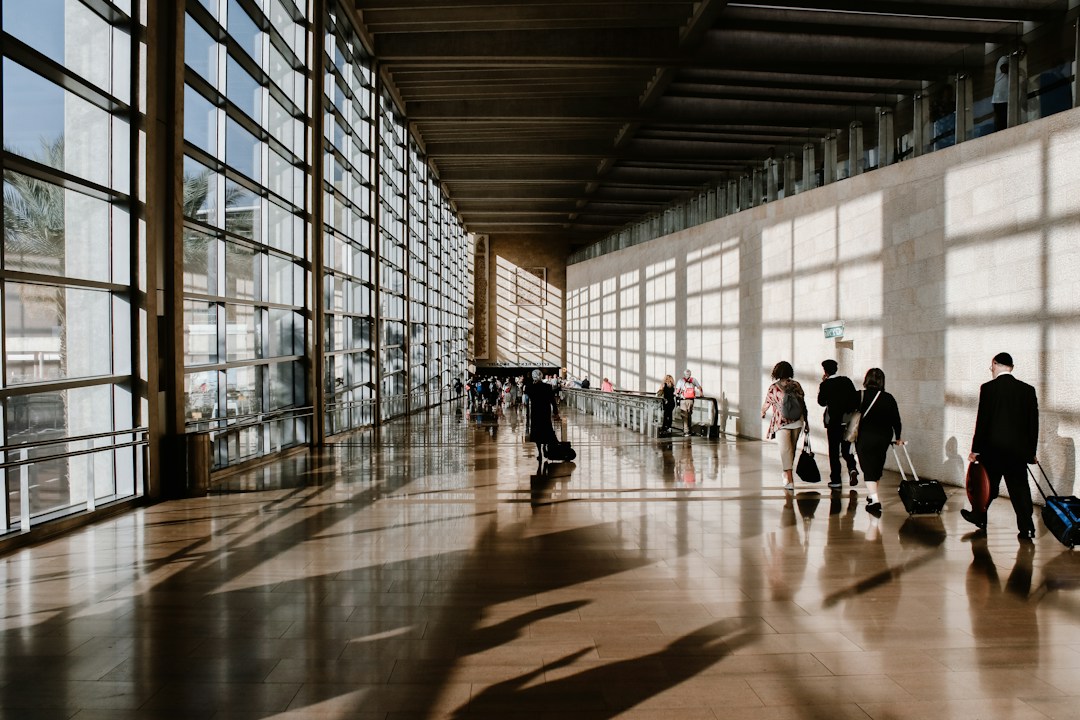
A long travel day can make you tired. Jet lag can make you tired at the wrong time. Those are related problems, but they are not the same problem—and treating them as one usually leads to bad decisions.
Travel fatigue can follow a long day in a plane, car, train, or airport even when you never cross a time zone. It is the accumulated cost of sitting, disrupted meals, dehydration, poor sleep, crowds, delays, and mental friction. Jet lag is circadian misalignment: your internal clock and the local clock disagree after rapid travel across time zones.
That distinction matters because the solution changes. Travel fatigue usually benefits from recovery basics and gentle movement. Jet lag requires those basics plus correctly timed signals—especially light, sleep, meals, and activity—to help the body adapt to local time.
The Lean by Habit principle is simple: restore rhythm before you test fitness. The goal of arrival day is not to prove your discipline with a punishing workout. It is to make the next good decision easier.
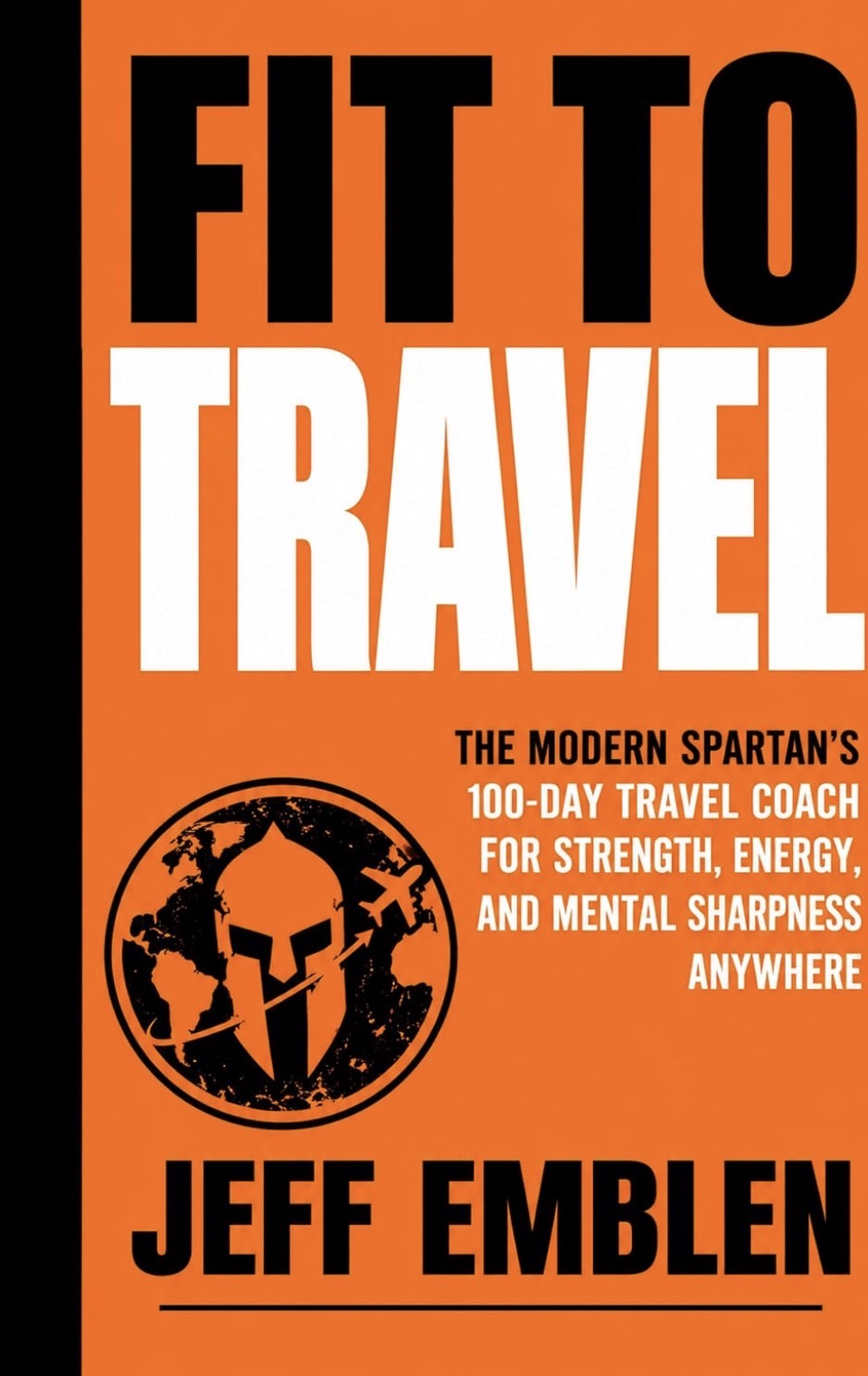
Fit to Travel is coming this week. Stay tuned for launch details!
The book turns travel fitness into a practical field system built around preparation, minimum effective workouts, and a fast return after disruption.
Travel fatigue vs. jet lag: a useful definition
Travel fatigue is the general physical and mental wear created by the journey. It can happen on a six-hour drive without changing time zones.
Jet lag is a temporary sleep-wake disorder caused by rapid travel across time zones. The CDC Yellow Book describes it as a mismatch between the internal biological clock and local time. Diagnostic criteria include sleep disruption and impaired daytime function after crossing at least two time zones.
| What you notice | More consistent with travel fatigue | More consistent with jet lag |
|---|---|---|
| Main cause | The journey itself | Your body clock is out of sync with local time |
| Can happen without crossing time zones? | Yes | No |
| Typical pattern | General tiredness, stiffness, low motivation | Sleepiness or alertness at the wrong local time, disrupted sleep, GI symptoms |
| Primary response | Move, eat normally, hydrate, recover | Use those basics plus correctly timed light and sleep |
You can have both. An overnight eastbound flight may create stiffness and sleep loss from travel while also forcing the internal clock to advance. That is why a single “push through it” rule is too crude.
What the 2026 evidence adds
A 2026 systematic narrative review examined 89 studies on long-haul travel, jet lag, physiology, and athletic performance. Its most useful conclusion is not a dramatic hack. The evidence is highly variable: routes, time zones, travel details, and performance tests differed substantially, and many studies did not report basic travel information. The review supports distinguishing travel fatigue from circadian jet lag rather than assuming every post-flight performance change has one cause.
That limitation is important. Much of the research involves athletes, small samples, laboratory simulations, or tightly managed travel. A business traveler should not borrow an elite team’s medication or light protocol and assume it will transfer perfectly.
There is stronger practical evidence for interrupting long periods of sitting. A 2026 meta-analysis of 13 controlled studies found that brief activity breaks during prolonged sitting produced acute improvements in flow-mediated dilation and peripheral blood flow, with a small reduction in systolic blood pressure. These were short-term physiological outcomes, not proof that ankle pumps prevent every travel-related clot or erase the effects of sitting.
Separately, the CDC advises travelers on journeys longer than four hours to move their legs frequently and, when possible, walk every one to two hours. Individual blood-clot risk varies considerably, so people with prior clots, recent surgery, active cancer, pregnancy, hormone therapy, limited mobility, or other risk factors should discuss travel plans with a clinician.
The Lean by Habit Arrival Ladder
The Arrival Ladder gives each phase of the trip one job. It replaces improvisation with a short sequence you can repeat.
1. During travel: protect circulation
Set a discreet movement trigger before departure. On a long flight or ride, use the same cue every time: when the seat-belt sign turns off, after a movie ends, or at the top of each hour.
- Perform 20 deliberate ankle pumps.
- Alternate heel raises and toe raises.
- Briefly tense and release the calves and thighs.
- Stand or walk when it is safe and permitted.
This is not a workout and it is not a guarantee against deep vein thrombosis. It is a low-friction way to interrupt immobility. The trigger matters more than inventing new exercises every trip.
2. On arrival: choose the clock you are following
If the trip is short enough that full adaptation would be pointless, maintaining more of your home schedule may be reasonable. For a longer stay, begin living by destination time: meals, light exposure, movement, and bedtime should support the new clock.
The CDC notes that eastward travel is generally harder because most people adapt more slowly when shifting their clock earlier. Average adaptation is about one hour per day eastward and roughly 1.5 hours per day westward, although individual responses vary.
Do not treat light exposure casually. Morning light can move the clock earlier; evening light can move it later. The best timing depends on direction, time zones crossed, habitual sleep, and arrival time. For complicated itineraries, a reputable jet-lag calculator or clinician is more defensible than guessing.
3. First local day: use movement as a time cue, not a fitness test
When you arrive during the local day, take a purposeful outdoor walk if conditions are safe. The walk combines several useful signals: local daylight, gentle muscular activity, a break from sitting, and a behavioral declaration that the travel day has ended.
Keep it easy enough to finish feeling better than when you started. Ten to twenty minutes is often sufficient for the behavioral purpose. You are not trying to regain lost fitness in one session.
4. First workout: select the smallest dose that improves tomorrow
Use this three-level decision:
- Restore: Easy walk, mobility, normal meals, and local bedtime when sleep loss or symptoms are substantial.
- Prime: Ten to twenty minutes of easy cardio plus a few controlled bodyweight or band movements when you feel functional but flat.
- Train: A normal session only when coordination, alertness, hydration, and warm-up performance feel normal.
The decision rule is: choose the highest dose that leaves tomorrow’s routine easier—not the highest dose your pride can survive today.
This is where the resistance-band travel workout becomes useful. A compressed session can preserve the training pattern without demanding a gym, a perfect night of sleep, or a personal record.
5. First night: protect the local sleep opportunity
Avoid turning arrival fatigue into a three-hour afternoon sleep. The CDC suggests that a short nap of roughly 20–30 minutes may support alertness while a long daytime nap can make local bedtime harder.
Alcohol may make sleep onset feel easier while fragmenting sleep later. That tradeoff is especially relevant after travel; the recent Lean by Habit guide on alcohol and workout recovery explains what can happen to sleeping heart rate, HRV, REM sleep, and next-day activity.
Melatonin is not a universal bedtime vitamin. Timing changes its effect, supplements vary in labeled content, and interactions matter. The CDC notes that taking it at the wrong biological time can worsen misalignment. Get individualized guidance if you use it, particularly if you take other medication or manage a health condition.
A practical first-24-hours plan
| Phase | Default action | What not to do |
|---|---|---|
| In transit | Leg movement frequently; walk every 1–2 hours when feasible | Assume one hard workout before departure cancels prolonged sitting |
| Arrival | Adopt destination time for a longer stay | Let exhaustion make every decision |
| Local daytime | Outdoor walk and normal local-time meal | Use a long nap as the automatic answer |
| Training window | Restore, Prime, or Train | Test strength or conditioning to prove you are “back” |
| Local evening | Lower light, follow the chosen bedtime | Stack late caffeine, alcohol, and intense training |
| Next morning | Resume the next planned useful action | Compensate for a missed session with excessive volume |
The habit lesson: arrival is a transition, not a verdict
Travel disrupts cues. Your normal gym, meal timing, bedtime, and equipment disappear at once. The mistake is interpreting that disruption as a character test.
Build the arrival sequence before the trip:
- Choose your in-transit movement cue.
- Decide whether you will adapt to destination time.
- Identify a safe outdoor walking route near the hotel.
- Pack the minimum workout before you pack optional gear.
- Choose Restore, Prime, or Train after the warm-up—not from the airplane seat.
The companion to Fit to Travel uses the same idea: choose tomorrow’s dose tonight, keep a two-minute floor, and never restart the calendar because one day went sideways. You can download the free 100-day companion here.
Travel fatigue asks for recovery. Jet lag asks for timing. Your habit needs a next action, not a punishment.
Medical note: This article is educational and is not medical advice. Seek urgent medical help for unexplained shortness of breath, chest pain, coughing blood, fainting, or other symptoms of pulmonary embolism. Contact a clinician promptly for unexplained one-sided limb swelling, warmth, redness, pain, or tenderness. Travelers with elevated clot risk or medical conditions should obtain individualized advice before long trips.


Leave a Reply