
By Jeff Emblen
Travel has a way of turning a normal training week into a negotiation. The hotel gym is closed. The only dumbbells stop at 25 pounds. Meetings run late. Or you simply cannot get to your regular gym.
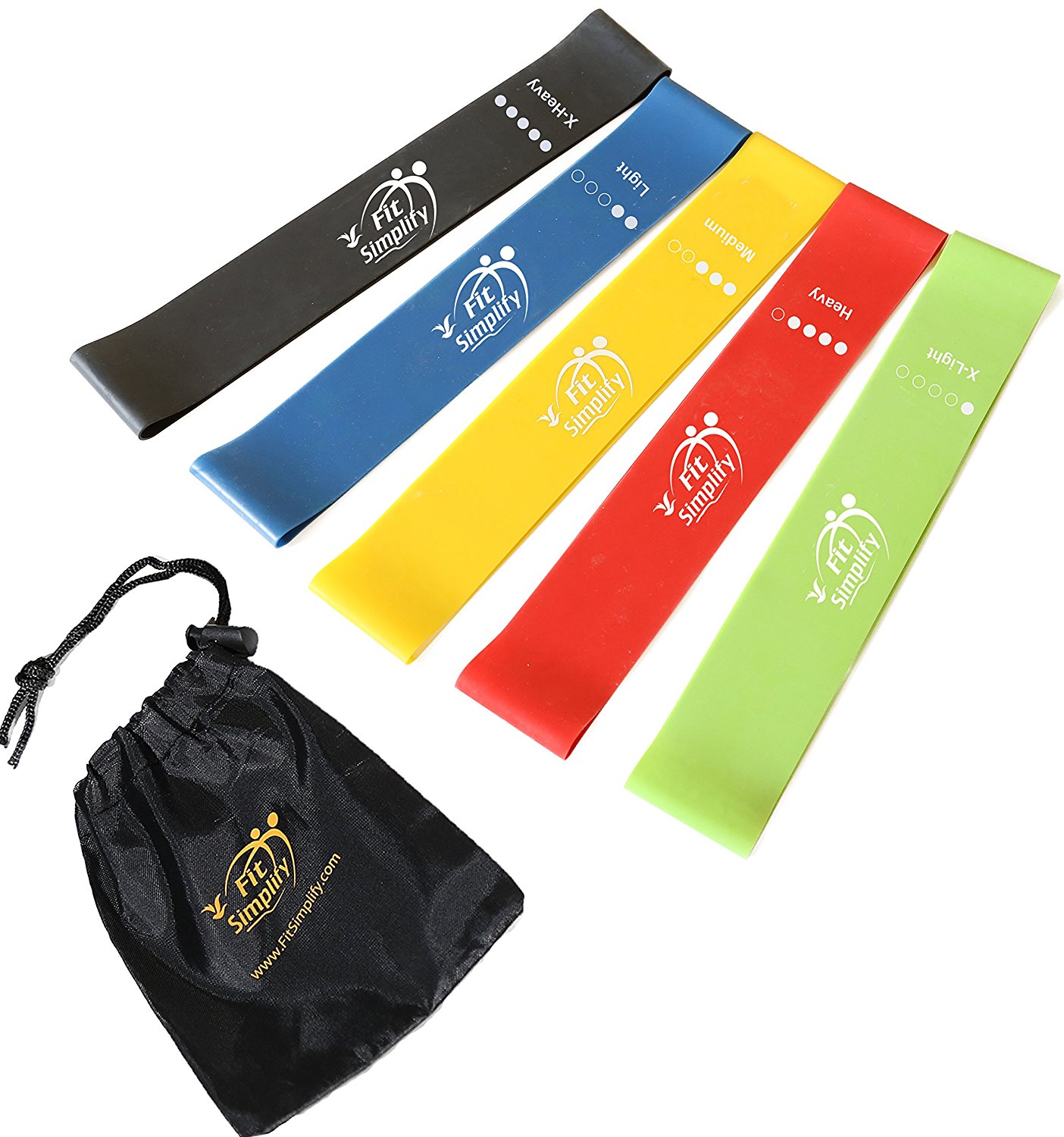
A resistance band does not solve every training problem. But it solves one of the most important ones: access. It can put meaningful resistance in a carry-on bag and let you train nearly every major movement pattern in a hotel room, office, home, or park.
More importantly, the science supports the basic idea. Elastic resistance is not merely “better than nothing.” When it is progressively loaded and performed with enough effort, it can produce meaningful improvements in strength and physical function—and in some research, strength gains comparable with conventional resistance training.
The short answer: do resistance bands actually work?
Yes. A 2019 systematic review and meta-analysis comparing elastic resistance with conventional resistance such as weight machines and dumbbells found no significant superiority of either method for upper- or lower-body strength. The review included eight studies across different populations and protocols. That does not prove bands and barbells are identical for every goal, but it is strong evidence that bands can be a legitimate strength-training tool rather than a consolation prize. Read the study on PubMed.
An earlier systematic review in healthy adults reached a similar practical conclusion: elastic resistance improved muscular strength compared with no training, while strength outcomes were similar to active resistance-training controls. Review the meta-analysis.
That conclusion also fits the American College of Sports Medicine’s updated 2026 resistance-training guidance. ACSM specifically notes that traditional gym settings are not required for results and that elastic bands, bodyweight training, and home-based routines can produce meaningful benefits in strength, hypertrophy, and physical function. See ACSM’s 2026 guidance.
Why bands are unusually useful when you travel
The biggest benefit of bands is not that they are magically superior to weights. It is that they dramatically reduce the friction between you and a useful workout.
A small band kit can weigh less than a pair of shoes, fit in a carry-on, require almost no floor space, and provide resistance for squatting, hinging, pushing, pulling, pressing, rowing, arm work, lateral movement, and anti-rotation core exercises. You can also change resistance quickly by using a stronger band, shortening the band, changing your stance, increasing stretch, combining bands, adding repetitions, or slowing the movement.
That makes bands especially compatible with the Lean by Habit philosophy: the best backup workout is not the theoretically perfect workout. It is the workout that survives the disruption.
The Lean by Habit Travel Strength Rule
When travel breaks your normal routine, do not ask, “How can I recreate my gym perfectly?” Ask, “What is the smallest training system that preserves the habit and gives my muscles a real reason to adapt?”
Use this three-level fallback:
- Ideal: Perform your normal strength program when the equipment and schedule allow it.
- Compressed: Use bands to train the major movement patterns in 20–30 minutes.
- Minimum: When the day goes sideways, complete one hard set of the essential movements in 8–12 minutes.
The objective is not to pretend the minimum workout equals a full gym session. The objective is to prevent an equipment problem from becoming a consistency problem.
What the research says about strength, function, and aging
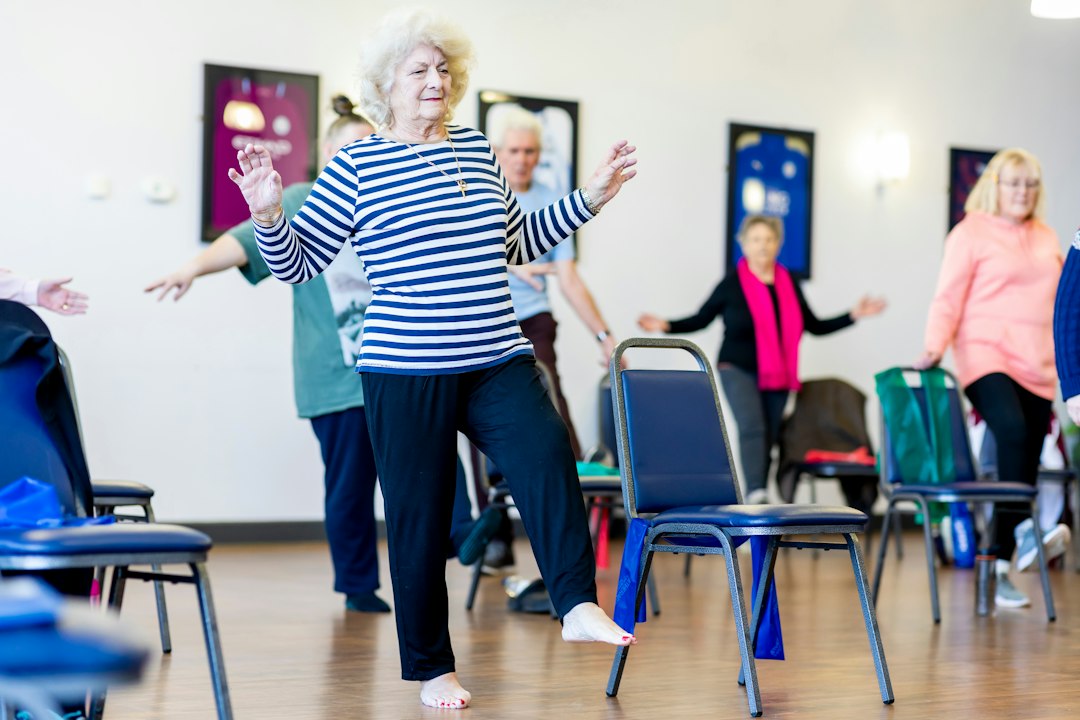
The evidence becomes particularly interesting for adults who care about maintaining strength and function as they age. A 2025 systematic review and meta-analysis of 25 studies involving 1,318 older adults found elastic-band training improved several measures of lower-body strength, balance, and functional performance compared with controls. The authors also cautioned that more high-quality research is needed. View the review.
A 2026 systematic review focused on frail adults age 65 and older found improvements in functionality, handgrip strength, and lower-limb strength, particularly with progressive programs of longer duration. But the evidence was limited: only four randomized trials with 148 participants were included, and three studies had a high risk of bias. That is a useful reminder not to turn “bands work” into “bands are magic.” View the 2026 review.
Another meta-analysis of elastic resistance in older adults found improvements across several functional tests compared with no training. See the systematic review. Taken together, the evidence supports bands as a practical resistance-training option, while leaving plenty of room for better studies on optimal loading, progression, hypertrophy, and long-term outcomes.
The important part most band workouts miss: progression
Owning a band does not build strength. Progressive training does. The resistance has to become challenging enough over time.
With a barbell, progression is easy to see: add five pounds. Bands require a little more attention because their resistance increases as they stretch and manufacturers do not always standardize loads. That does not make progression impossible. It simply means you should track variables you can control.
- Move to a heavier band.
- Shorten the working length of the band.
- Stand farther from the anchor to increase initial tension.
- Add repetitions within a planned range.
- Add a set.
- Use a larger range of motion when appropriate.
- Slow the lowering phase or add a pause.
- Progress to a harder unilateral variation.
A simple rule works well: choose a repetition range such as 8–15. When you can reach the top of the range with clean form and still have several easy repetitions left, increase the resistance or make the exercise harder.
A full-body resistance-band workout for travel
This is not designed to exhaust you for the sake of feeling productive. It is designed to cover the major movement patterns with minimal equipment.
| Movement | Band exercise | Target |
|---|---|---|
| Squat | Band front squat or split squat | 2–3 sets × 8–15 |
| Hinge | Band Romanian deadlift | 2–3 sets × 8–15 |
| Push | Band chest press or resisted push-up | 2–3 sets × 8–15 |
| Pull | Band row | 2–3 sets × 8–15 |
| Vertical press | Band overhead press | 2 sets × 8–15 |
| Core | Pallof press or anti-rotation hold | 2 sets per side |
Rest long enough to make the next set productive—usually about 60–120 seconds depending on the exercise and effort. For strength and muscle retention, the final repetitions should feel challenging while technique remains controlled.
The 10-minute “meeting ran late” version
When time disappears, shrink the workout instead of deleting it. Perform 2–3 rounds of a band squat, band row, band chest press or push-up, and band Romanian deadlift. Keep transitions short, but do not rush your repetitions.
This is the Lean by Habit minimum effective fallback: enough work to preserve the training cue, hit the major movement patterns, and make tomorrow’s return easier.
Where resistance bands are better than a hotel gym
A hotel gym can be excellent. It can also contain one treadmill, a broken bench, and three mismatched dumbbells. Bands give you consistency of equipment from city to city. They are quiet, portable, inexpensive, easy to store, and flexible enough to train in very little space.
They are also useful at home when weather, childcare, work, commuting, or scheduling makes the gym impractical. That is why bands belong in a backup system, not just a travel bag.
Where bands do not replace the gym
There are tradeoffs. Heavy barbell and machine training make absolute loading easier to measure and progress. Bands have changing resistance through the range of motion, can be awkward for certain movements, and make precise load comparisons difficult. Advanced lifters may also struggle to reproduce very heavy lower-body loading with a travel-size band kit.
If your goal is maximizing strength in the squat, bench press, or deadlift, you still need to practice those lifts. If your goal is maximizing hypertrophy, a well-equipped gym can make high training volumes and precise progression easier.
But those limitations answer the wrong question for a traveler. The relevant comparison is often not bands versus the perfect gym workout. It is bands versus the workout you were otherwise going to miss.
Safety: inspect the band before you train
Elastic bands wear out. Before training, check for cracks, tears, thinning, damaged handles, or compromised anchor points. Avoid anchoring a band to furniture or fixtures that can move or fail. Keep the band away from sharp edges, and do not stretch it toward your face. If an exercise causes unusual pain, stop and modify it.
The real benefit: preserving the identity and the routine
The physiology matters, but so does the behavior.
Travel creates a predictable habit break: the normal cue, location, equipment, and schedule disappear at the same time. Packing a band creates a preplanned response. The trigger becomes simple: if the gym is unavailable, the band workout starts.
That is more powerful than waiting to decide whether today is a “real workout day.” You made the decision before the obstacle arrived.
For more on building a portable system, see Gym in a Carry-on, The Backup Gym, and The Ultimate GPP Guide for Busy Professionals.
Bottom line
Resistance bands are not a gimmick and they are not a perfect replacement for every form of weight training. They are a scientifically credible resistance-training tool with one enormous practical advantage: they make strength training portable.
When you travel or cannot get to the gym, that portability can protect both sides of the equation—the physical training stimulus and the habit of showing up.
Pack the band. Shrink the workout when necessary. Keep the pattern alive. Then return to normal training when normal life returns.

Leave a Reply