
Strength matters as you age. But strength is only half the equation. You also need to be able to use that strength quickly.
That quality is called muscle power, and it is suddenly getting overdue attention. A September 2, 2026 Washington Post report highlighted power as a muscle quality that can deteriorate earlier than strength. The timing is useful: the American College of Sports Medicine’s 2026 resistance-training guidance also specifically addresses training for power.
The Lean by Habit lesson is not to rebuild your entire program around explosive exercise. It is simpler: keep the strength habit you already have and add a small, repeatable dose of controlled speed.
What Is Power Training?
Power training is resistance exercise performed with the intent to move the working phase quickly while maintaining control and good technique. Strength describes how much force you can produce. Power adds time to the equation: how quickly can you produce that force?
Think of standing up quickly, catching yourself after a stumble, climbing stairs with purpose, lifting luggage into an overhead bin, or accelerating across a street. Those tasks do not simply ask whether you are strong enough. They ask whether you can access strength quickly enough.
Strength vs. Power: What’s the Difference?
| Quality | Main Question | Typical Training Emphasis | Everyday Example |
|---|---|---|---|
| Strength | How much force can you produce? | Heavier resistance, controlled reps | Lifting a heavy suitcase |
| Power | How quickly can you produce force? | Moderate resistance, fast controlled lifting phase | Recovering quickly from a stumble |
| Endurance | How long can you keep producing effort? | Repeated or sustained work | Climbing several flights of stairs |
You do not have to choose between them. A durable fitness program develops all three.
Why Muscle Power Matters More With Age
Muscle mass and maximal strength tend to decline with age, but power can be especially vulnerable because it depends on both muscular force and the nervous system’s ability to recruit that force quickly.
A 2026 systematic review and meta-analysis involving older adults found that resistance training improved muscle mass, strength, and functional performance. The authors also examined movement velocity as an important programming characteristic. Another 2026 meta-analysis found that multicomponent training improved measures including chair stands, timed up-and-go performance and walking capacity.
That matters because the goal of training after 40 is not merely to produce impressive gym numbers. It is to preserve physical options: the ability to move, react, carry, climb and recover when life demands it.
What the New ACSM Guidance Says About Power
ACSM’s 2026 resistance-training recommendations provide a refreshingly practical target. For power, ACSM suggests using roughly 30 to 70 percent of one-repetition maximum and moving as quickly as possible during the concentric, or lifting, phase.
That does not mean throwing weights around. The lowering phase stays controlled. Technique stays clean. The load is light enough that speed is intentional rather than desperate.
This fits the same principle discussed in Consistency Beats Complexity: sophisticated programming matters less than consistently performing useful work.
The Lean by Habit Power Dose
You do not need a separate “power day.” For many healthy adults, the easiest approach is to place one power-oriented movement near the beginning of two existing strength sessions each week, after warming up and before fatigue accumulates.
A simple 8-minute template
- Warm up for 2 minutes. Walk briskly, perform easy squats, arm circles and several practice repetitions.
- Choose one familiar movement. Good options include a light goblet squat performed with a quick stand, medicine-ball chest pass, controlled kettlebell swing for experienced lifters, or a light push press.
- Perform 3 to 5 repetitions. Move the lifting phase quickly while staying completely in control.
- Rest 60 to 90 seconds. Power needs quality, not exhaustion.
- Repeat for 3 sets. Stop if speed or technique noticeably deteriorates.
Then continue your normal workout.
The objective is not to become tired. It is to practice producing force quickly.
Four Power Exercises That Scale Well
1. Fast Sit-to-Stand
Sit on a stable bench or chair. Stand up with deliberate speed, finish tall, then lower under control. This is a low-complexity entry point because the movement is already familiar.
2. Medicine-Ball Chest Pass
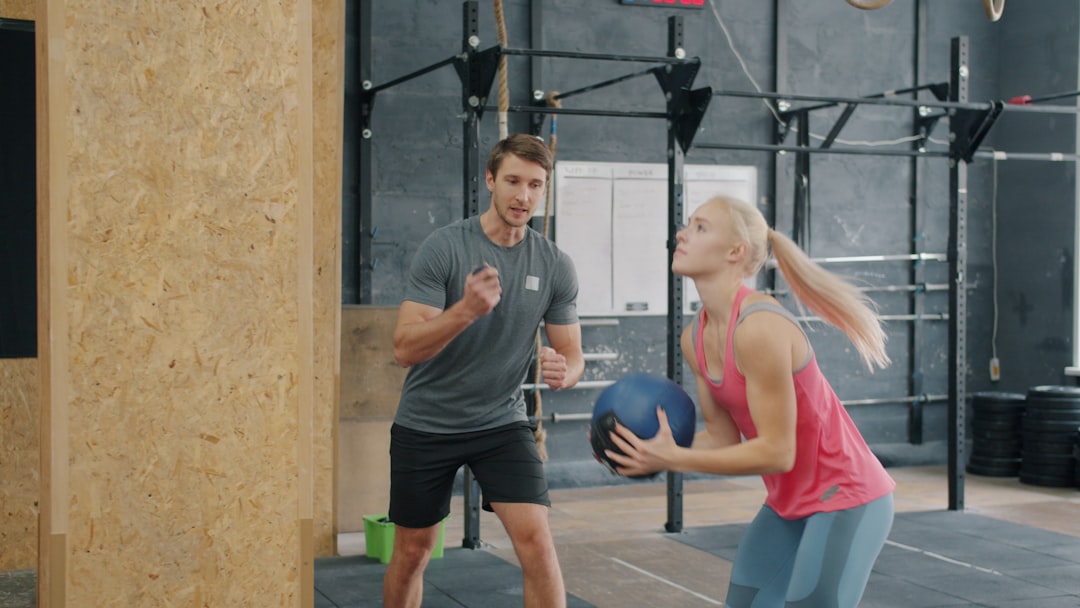
Use a light medicine ball and explosively pass it to a sturdy wall or training partner. Unlike a dumbbell press, the ball can safely leave your hands, allowing you to accelerate through the entire movement.
3. Light Goblet Squat With Fast Stand
Lower under control, then stand quickly. Keep the load substantially lighter than you would for heavy strength work.
4. Push Press
For experienced trainees, a light dumbbell push press combines leg drive and upper-body force production. Accelerate the weights overhead, then lower them carefully.
If your base strength needs work first, build it. The farmer’s carry is another simple way to develop useful whole-body strength before adding faster movements.
Power Training Is Not a License to Get Reckless
“Explosive” is an unfortunate word because it can make sensible adults suddenly audition for an action movie.
Power training should look crisp, not chaotic. Start with familiar movements and modest resistance. Keep repetitions low. Rest enough to preserve speed. Stop a set when technique deteriorates.
People with significant joint problems, balance limitations, cardiovascular concerns, osteoporosis-related restrictions, or a long layoff from exercise should get appropriate professional guidance before introducing ballistic or high-impact exercises. Power can also be trained without jumping.
The Minimum Effective Dose Wins Again
One reason people abandon useful fitness ideas is that they turn every new idea into another complete program.
Do not do that.
If you already strength train twice per week, add one power movement near the beginning. Three sets may take five to eight minutes. That is enough to establish the behavior, practice the skill and see whether it deserves a permanent place in your routine.
This is the same architecture behind the Lean by Habit approach to the five components of fitness: cover the important qualities without turning fitness into a second career.
A Two-Day Power + Strength Example
| Day A | Day B |
|---|---|
| Fast goblet squat: 3 × 5 | Medicine-ball chest pass: 3 × 5 |
| Squat or leg press | Romanian deadlift |
| Press | Row |
| Row | Push-up or press |
| Carry or core | Carry or core |
Notice what did not happen: the entire program did not change. A small dose was layered onto an existing routine.
Frequently Asked Questions
Is power training safe after 40?
For healthy adults with an appropriate strength base, controlled power training can be scaled to ability. The key is using familiar movements, manageable resistance, low repetitions and excellent technique rather than chasing fatigue or maximal speed.
Do I need to jump to train power?
No. Fast sit-to-stands, medicine-ball throws, lighter resistance exercises performed with a fast lifting phase and other low-impact movements can train power without jumping.
How often should I train power?
A practical starting point is twice per week, adding a few high-quality sets near the beginning of existing strength sessions.
Should power training replace heavy strength training?
No. Strength and power are complementary qualities. Continue progressive resistance training and layer in a modest amount of velocity-focused work.
What load should I use for power training?
ACSM’s 2026 guidance points to moderate loads of roughly 30 to 70 percent of 1RM for power, performed with maximal intended speed during the lifting phase. Beginners should prioritize movement quality and may start even lighter.
The Bottom Line
Do not train only to be strong. Train to access your strength when life asks for it.
The emerging conversation around muscle power is useful precisely because it does not require a fitness revolution. Add a few minutes of controlled speed to the strength habit you already trust. Keep the dose small enough to repeat. Progress only when technique earns it.
Strength gives you capacity. Power helps you use it in time.
Lean by Habit challenge: During your next two strength sessions, add three low-rep sets of one familiar power movement before your main lifts. Score the behavior, not the spectacle.
Sources
- American College of Sports Medicine, 2026 Resistance Training Position Stand
- Tao et al., 2026 systematic review and meta-analysis of resistance-training velocity in older adults
- Toosi et al., 2026 systematic review and meta-analysis of multicomponent training in older adults
Featured photo by Vitaly Gariev via Unsplash.


Leave a Reply