
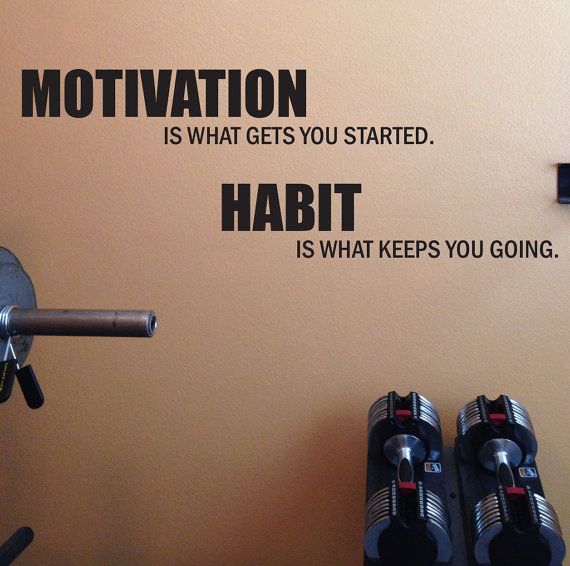
Motivation can get you started, but habits are what keep you moving when motivation disappears.
Most people believe they need to feel motivated before they can eat better, exercise consistently, or lose body fat. That belief creates a fragile system. Motivation rises and falls with your mood, energy, stress level, schedule, and environment. When the feeling fades, the behavior usually fades with it.

The solution is not to find a more powerful speech, a more exciting goal, or a perfect Monday morning. The solution is to build a system that makes the right action easier to repeat. This is one of the central ideas in Lean By Habit, Second Edition: lasting change depends less on emotional intensity and more on behavioral consistency.
Motivation Is Temporary by Nature
Motivation is a feeling, and feelings are temporary. You may feel highly motivated after seeing an unflattering photograph, receiving a medical warning, or setting an ambitious New Year’s goal. That emotional surge can be useful, but it is not a dependable operating system.
The first few workouts feel exciting because the goal is new. The first week of meal preparation feels productive because the plan is fresh. Then repetition sets in. Progress slows. Work becomes demanding. Sleep suffers. The weather changes. The emotional fuel that once made the plan feel easy begins to disappear.
The goal is not to stay motivated. The goal is to keep acting when motivation is low.
Habits Reduce the Need for Willpower
A habit is a behavior that becomes easier to perform through repetition. The more consistently you repeat an action in a stable context, the less negotiation it requires. You stop asking whether you feel like doing it and begin treating it as part of your normal routine.
Consider the difference between deciding to exercise whenever you feel inspired and training every Monday, Wednesday, and Friday immediately after work. The first approach requires a fresh decision each day. The second approach attaches the behavior to a predictable cue. The schedule makes the decision in advance.
This is why habits are more powerful than motivation. They conserve mental energy. They reduce decision fatigue. They allow useful behavior to continue even when enthusiasm is absent.
Build Systems Instead of Chasing Feelings
A goal describes the result you want. A system defines what you will repeatedly do. Losing 20 pounds is a goal. Planning tomorrow’s meals each evening, strength training three times per week, walking after dinner, and recording your body weight are systems.
Goals provide direction, but systems create progress. A well-designed system should answer four practical questions:
- What action will I perform?
- When and where will I perform it?
- What will remind me to begin?
- How will I make the action easier to complete?
The clearer these answers become, the less you must rely on motivation in the moment.
Start Smaller Than Your Ambition
People often make the mistake of matching the size of their first action to the size of their goal. A large goal creates an oversized plan: daily workouts, a completely new diet, early wake-up times, extensive meal preparation, and perfect tracking. The plan may look impressive, but it is difficult to sustain.
A better approach is to establish a minimum action that is easy to repeat. Walk for ten minutes. Perform one short strength-training session. Prepare one high-protein meal. Record one day of food intake. The minimum action is not the final destination. It is the entry point that builds consistency.
You can always do more when time and energy permit. The important rule is that the habit must remain small enough to survive difficult days.
Shape the Environment
Behavior is strongly influenced by what is visible, convenient, and immediately available. When healthy food is prepared and easy to reach, eating well requires less effort. When workout clothes are packed the night before, training requires fewer steps. When distracting food is absent from the house, resisting it requires less willpower.
Do not design your environment around the person you hope to be on your best day. Design it around the person you are likely to be when you are tired, busy, stressed, or distracted. Make good choices obvious and convenient. Make unwanted choices less visible and more difficult.
Use a Simple Habit-Building Formula
Use this five-step process to turn a desired behavior into a dependable routine:
- Choose one behavior. Avoid changing everything at once.
- Attach it to a reliable cue. Use a specific time, place, or existing routine.
- Shrink the commitment. Define a version you can complete even on a difficult day.
- Prepare the environment. Remove friction before the moment of action.
- Track repetition. Measure whether you performed the behavior, not whether every attempt was perfect.
For example: “After I pour my morning coffee, I will write down what I plan to eat for the day.” The cue is clear, the action is small, and the behavior supports better decisions later.
Consistency Wins
Motivation encourages dramatic beginnings. Habits create ordinary repetitions. Those repetitions may not feel exciting, but they are what produce lasting results.
You do not need to become a more motivated person. You need fewer daily negotiations, clearer cues, smaller starting actions, and an environment that supports the behavior you want. Build the system first. Let repetition make the behavior easier. Allow consistency to do what motivation cannot.
This article is based on principles from Jeff Emblen’s Lean By Habit, Second Edition: better habits create a better body because sustainable systems outperform temporary motivation.




Leave a Reply