
Walking yoga sounds like something invented by a wellness marketer who lost their yoga mat. But the idea is more sensible than the name suggests.
Instead of treating a walk as dead time between destinations, walking yoga combines ordinary walking with deliberate breathing, attention, posture and occasional mobility work. No studio. No mat. No complicated sequence. You walk, pay attention, breathe on purpose and occasionally stop for a simple movement.
And people are suddenly very interested. PureGym’s 2026 fitness report ranked walking yoga as the second-fastest-growing fitness trend, reporting a 2,414% increase in Google search interest. A September trend report also highlighted the format as one of the year’s fastest-growing walking-based workouts.
That does not mean walking yoga is magic. Google searches are not clinical trials. But the trend sits at the intersection of several behaviors that already have evidence behind them: walking, physical activity, mindfulness and reducing sedentary time.
So the useful question is not whether “walking yoga” has unlocked a secret form of exercise.
The useful question is: Can combining simple movement with mindfulness make an activity easier to repeat and therefore more valuable?
What Is Walking Yoga?
There is no universally accepted walking-yoga protocol. That is important because social media has a habit of giving a catchy name to a loose collection of old ideas and then acting as if someone just discovered mitochondria.
In practice, walking yoga generally combines four elements:
- comfortable walking,
- deliberate or rhythmic breathing,
- attention to sensations, posture and surroundings,
- brief mobility or yoga-inspired movements.
A session might include five minutes of relaxed walking while noticing your breathing, ten minutes of purposeful walking, a few standing lunges or shoulder movements, then several minutes of slower walking to finish.
That makes it less of a new exercise modality and more of a behavioral wrapper around walking.
That distinction matters.
The Trend Is New. The Ingredients Are Not.
The strongest evidence for walking yoga comes from its individual components rather than from studies of the exact trend.
A 2024 systematic review and meta-analysis examined 75 randomized controlled trials involving 8,636 participants. Walking interventions significantly reduced symptoms of depression and anxiety compared with inactive control groups. The effects varied substantially across studies, but the overall evidence reinforces a simple point: walking is not merely transportation. It is legitimate physical activity with measurable psychological benefits.
Meanwhile, a 2026 systematic review and meta-analysis specifically examined mindfulness integrated into exercise. Across 17 studies, mindfulness-based exercise interventions produced a moderate improvement in affective responses to exercise. The authors were appropriately cautious because the studies were heterogeneous and often small, but the finding is interesting for one practical reason: how exercise feels can influence whether people keep doing it.
A separate systematic review of mindful walking and walking meditation reported potential improvements across psychological well-being, balance, functional fitness and selected cardiometabolic outcomes. Again, the evidence was not strong enough to declare walking meditation a superior form of exercise. Many included studies were small or had meaningful risk of bias.
That is exactly where the hype needs to stop.
Myth #1: Walking Yoga Is Better Than Normal Walking
We do not have good evidence showing that adding yoga language, breath counting or mindfulness makes the cardiovascular effects of walking dramatically better.
Your heart does not award bonus points because you called the walk a flow.
If two people walk at the same pace for the same duration, the basic physical stimulus will be similar. Walking yoga may add mobility, balance or psychological benefits depending on how it is performed, but it should not be marketed as metabolically superior to ordinary walking without evidence.
The potential advantage is behavioral: some people may find a more mindful walk enjoyable, calming or purposeful enough that they do it more consistently.
And consistency is where small advantages become large ones.
Myth #2: Easy Walking Replaces Cardio
It does not.
The World Health Organization recommends that adults accumulate 150 to 300 minutes of moderate-intensity aerobic activity per week, or 75 to 150 minutes of vigorous activity, along with muscle-strengthening work. WHO also emphasizes that any physical activity is better than none and that all movement counts.
A gentle walking-yoga session may contribute to total activity, particularly for someone who is currently sedentary. But if the pace never rises beyond very light effort, it should not automatically be counted minute-for-minute as moderate aerobic training.
Think of it as a useful layer of movement, not a loophole that eliminates the need to challenge your cardiovascular system.
Myth #3: If You Lift or Run, Easy Walking Does Not Matter
This is where fitness culture sometimes becomes unnecessarily binary. People assume that if hard training is valuable, easy movement must be irrelevant.
Recent research argues otherwise.
A 2026 British Journal of Sports Medicine analysis used accelerometer data from 71,715 UK Biobank participants and found a nonlinear association between light physical activity and lower all-cause mortality risk. The benefit of additional light activity diminished as moderate-to-vigorous activity increased, but it did not become meaningless.
In other words, the person who lifts three times per week can still benefit from being a person who moves during the other 165 hours.
That is a much more useful way to think about fitness.
The Real Benefit: Walking Yoga Shrinks the Starting Line
One reason fitness plans fail is that the entry cost becomes too high.
You need the gym. The right clothes. Forty-five free minutes. A program. A shower afterward. Enough energy to attack the workout. Suddenly movement has acquired more prerequisites than a mortgage application.
Walking yoga removes most of them.
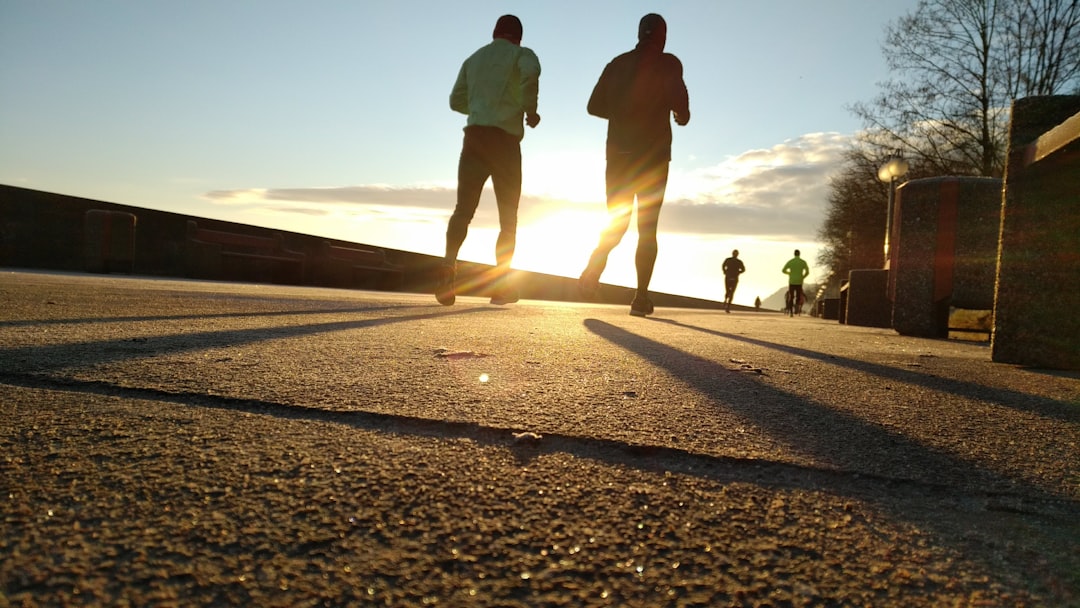
You can begin at your front door. You can do ten minutes. You can do it in ordinary clothes. You can walk after lunch, while traveling, between meetings or when you are too mentally cooked for a structured workout.
This is where the trend fits beautifully with a habit-based approach to fitness: make the useful behavior easier to begin.
The goal is not to convince yourself that ten easy minutes equals a hard training session. It does not.
The goal is to stop treating “not enough for a full workout” as equivalent to “not worth doing.”
A Simple 20-Minute Walking Yoga Routine
You do not need choreography. Try this:
Minutes 0–5: Arrive
Walk comfortably. Put the phone away. Let your shoulders relax and notice your breathing without trying to control it. Pay attention to how your feet contact the ground.
Minutes 5–10: Walk With Purpose
Increase the pace slightly. Stand tall, let the arms swing naturally and breathe rhythmically. You should still be able to speak in complete sentences.
Minutes 10–12: Mobility Stop
Use a bench, wall or open space if available. Perform several controlled reverse lunges or split squats, gentle thoracic rotations and overhead reaches. Nothing should be forced or painful.
Minutes 12–17: Mindful Walk
Resume walking. Instead of reaching for your phone, direct attention outward. Notice sounds, temperature, light and your surroundings. When attention wanders, bring it back to the walk.
Minutes 17–20: Downshift
Slow the pace. Let breathing settle. Finish feeling better than when you started rather than trying to turn the final three minutes into an accidental HIIT workout.
Where Walking Yoga Fits in a Real Fitness Plan
Walking yoga works best as a complement to the fundamentals.
A strong weekly framework still includes progressive resistance training, enough moderate or vigorous cardiovascular activity, adequate protein and nutrition, sleep, and plenty of ordinary movement.
Use walking yoga for the spaces between those things: recovery days, lunch breaks, travel days, stressful evenings, morning sunlight, post-meal movement or days when motivation has apparently left the country without forwarding its address.
It is particularly useful when the alternative is sitting.
The Lean by Habit Rule: Do Not Let the Name Distract You From the Behavior
Fitness trends often work like new packaging on old groceries.
Sometimes the packaging is ridiculous. Sometimes it gets people to finally eat the vegetables.
Walking yoga is not a revolutionary physiological discovery. The evidence does not justify claims that it burns extraordinary amounts of fat, replaces resistance training or produces benefits unavailable through other forms of physical activity.
But that does not make it useless.
Walking is valuable. Mindfulness may improve the experience of exercise. Mobility can help you explore and maintain useful ranges of motion. Reducing sedentary time is sensible. And an activity that requires almost no equipment, planning or psychological negotiation has an enormous practical advantage: you can actually do it.
The best fitness trend is not the one with the cleverest name.
It is the one that leaves a useful behavior behind after the trend disappears.
So if “walking yoga” gets you outside for twenty minutes instead of spending those twenty minutes scrolling through videos about walking yoga, the trend has already done its job.
Sources
- PureGym 2025/26 Fitness Report and 2026 trend forecast
- Mindfulness during exercise and affective responses: systematic review and meta-analysis (2026)
- Walking meditation and mindful walking: systematic review (2025)
- Walking and depressive/anxiety symptoms: systematic review and meta-analysis
- Light and moderate-to-vigorous physical activity and mortality: BJSM (2026)
- World Health Organization: Physical Activity
Leave a Reply