

Most people remember whether a workout felt hard. Far fewer remember exactly what they lifted three weeks ago, how many repetitions they completed, or whether their training is actually progressing. That is where a simple training log becomes surprisingly powerful.
A training log is not about turning fitness into accounting. It is about creating a feedback loop. You perform the work, record the result, review the evidence, and make the next workout slightly better. That process fits the Lean by Habit philosophy perfectly: reduce guesswork, make progress visible, and build a system you can repeat.
Why Memory Is a Poor Training System
Without a record, it is easy to repeat the same weights and repetitions for months while assuming you are progressing. It is equally easy to push too aggressively because you cannot remember what you did last time. A log gives you an objective reference point.
This matters because strength and muscle are built through repeated training plus appropriate progression. You do not need to improve every exercise every session, but over time you should see evidence that your capacity is increasing.
What to Track
Keep the system simple enough that you will actually use it. For most resistance training, record four things:
- Exercise: What movement did you perform?
- Load: How much weight did you use?
- Sets and repetitions: What work did you complete?
- One short note: Record anything that should influence the next session, such as technique, effort, pain, or an unusually difficult day.
You can use a notebook, spreadsheet, or app. The best tool is the one you will open every workout.
Turn the Log Into Progressive Overload
Progressive overload simply means gradually asking your body to do more as it adapts. Your training log makes that process concrete.
Suppose you bench press 155 pounds for three sets of eight. At the next appropriate session, you might aim for nine repetitions on one or more sets. Once you reach the top of your target repetition range with solid technique, you can increase the load slightly and begin building again.
The goal is not to force a personal record every day. The goal is to create a long-term upward trend while managing fatigue and maintaining good technique.
The Habit Loop Hidden Inside Your Training Log
A log also strengthens the behavior itself. The previous workout becomes a cue. Recording today’s performance becomes the routine. Seeing measurable improvement becomes a reward. That is the same cue, routine, and reward structure discussed in The Habit Loop.
Visible progress can be especially useful when motivation is low. You are no longer relying on how you feel about your progress. You can see what you have done.
Use a Two-Minute Minimum
Do not create a tracking system so complicated that tracking becomes another chore. Your minimum standard can be two minutes at the end of the workout: record the exercises, loads, sets, and repetitions before leaving the gym.
This follows the same principle as the Minimum Viable Habit. Make the minimum easy enough to survive busy days. You can add detail when it is useful, but the core behavior stays small.
A Simple Four-Week Challenge
For your next four weeks of strength training, use this system:
- Choose one place to record every workout.
- Write down every working set before you leave the gym.
- Before each workout, review the previous session for those exercises.
- When technique and recovery are good, try to improve one measurable variable.
- At the end of four weeks, review the log for trends rather than judging individual workouts.
If you are building a sustainable strength routine, pair this approach with The Two-Day Strength Habit. Two well-planned sessions that you record and progressively improve can outperform an ambitious program you cannot sustain.
Measure the Behaviors That Matter
Body weight and mirror changes can fluctuate. Training performance gives you another form of evidence. Over months, more repetitions, better technique, greater loads, and improved consistency tell a meaningful story.
Do the work. Record the work. Learn from the work. Then make the next session a little better.
For downloadable training logs, habit trackers, cutting programs, maintenance plans, and strength resources, visit the Lean by Habit Program Downloads and put the system into practice.
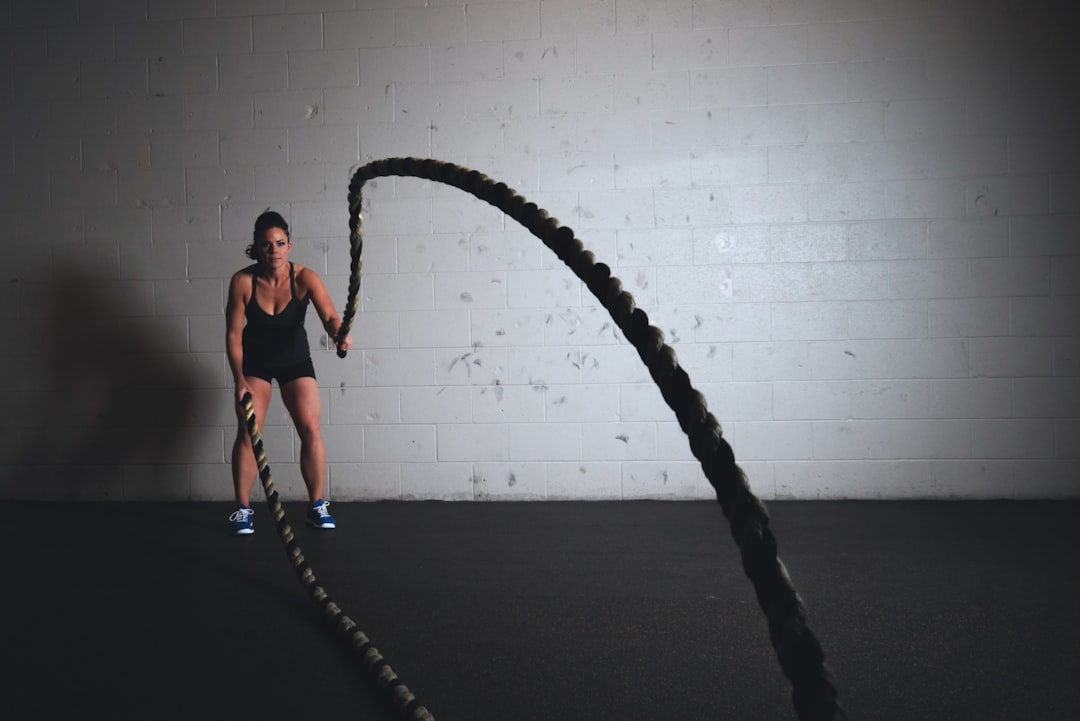
Featured photo by Vitaly Gariev via Unsplash.


Leave a Reply