

Updated for 2026.
The best business travel fitness packing list is not a miniature commercial gym. It is a small, dependable kit that lets you perform the major movement patterns in a hotel room, use a hotel gym when one is available, and protect your workout habit when the schedule falls apart.
The original version of this article grew from a practical problem: business travel often took me to hotels with limited equipment—or no useful fitness center at all. Packing a few simple tools gave me a backup plan instead of another reason to wait until I got home.
That remains the goal. You are not trying to reproduce your best gym workout inside a suitcase. You are trying to remove enough friction that training remains the default.
By Jeff Emblen, author of Lean by Habit.
The short answer: what should a business traveler pack for fitness?
For most trips, pack:
- One long resistance band or compact tube-band set
- One mini loop band
- Training shoes that also work for walking
- One lightweight workout outfit
- A simple interval timer on your phone
- Earbuds or headphones, if music helps trigger the routine
- An optional jump rope when the hotel and your joints make it practical
That is enough to train your legs, hips, back, chest, shoulders, arms, and trunk without depending on a hotel gym. The resistance bands do most of the work. Everything else either supports the habit or expands your conditioning options.
Pack movement patterns, not gadgets
A travel kit earns its space when it helps you cover a useful movement pattern. This prevents the common mistake of packing several clever-looking devices that all solve the same problem.
| Movement need | Travel-friendly options | What to pack |
|---|---|---|
| Squat or lunge | Split squat, reverse lunge, band squat | Body weight or long band |
| Hip hinge | Band Romanian deadlift, good morning, hip bridge | Long band |
| Push | Push-up, band chest press, band overhead press | Floor space or long band |
| Pull | Band row, pull-apart, face pull | Long band; secure anchor only when appropriate |
| Brace | Dead bug, plank, suitcase hold | No equipment |
| Conditioning | Brisk walk, stairs, shadow boxing, jump rope | Shoes; rope optional |
This is the Lean by Habit packing rule: if an item does not protect a movement pattern or reduce friction, it does not automatically earn a place in the bag.
Choose the smallest kit that fits the trip
Minimum kit: shoes and one long band
This is the best choice for a short trip, a tightly packed carry-on, or a schedule that will allow only brief workouts. A long band can provide rows, presses, squats, hinges, curls, triceps work, and assisted mobility. Body-weight movements fill the remaining gaps.
Standard kit: long band, mini band, shoes, and timer
This is the practical default for most business travel. The mini band adds lateral walks, glute work, and additional lower-body options without taking meaningful space. A timer makes a 10- or 15-minute circuit easy to start without writing a complicated workout.
Expanded kit: add a jump rope or suspension trainer
Add equipment only when you know you will use it and the setting supports it. Jump ropes need adequate ceiling height, floor space, and reasonable sound control. Suspension systems and door anchors require a solid attachment point and careful setup. Never assume a hotel door, hinge, railing, or fixture can safely support training.
Why resistance bands are the foundation
Bands are useful for travel because they are light, inexpensive, and adaptable—not because they are magic.
A systematic review and meta-analysis comparing elastic resistance with conventional resistance found no significant difference between the methods for upper- or lower-body strength gains across the included studies. The evidence base was not enormous, and it does not prove that bands are superior to barbells, dumbbells, or machines. It does show that elastic resistance can be a legitimate strength-training tool rather than merely a warm-up accessory.
The American College of Sports Medicine’s 2026 resistance-training guidance reaches a similarly practical conclusion: elastic bands, body-weight exercises, and home-based routines can improve strength, muscle growth, and physical function. The biggest opportunity for the average adult is moving from no resistance training to some consistent resistance training.
For a deeper explanation of the evidence, progression methods, limitations, and a complete six-movement program, use the Lean by Habit resistance-band travel guide.
Use the Travel Strength Rule
Your equipment is only useful if the workout survives contact with the itinerary. Instead of relying on one perfect plan, decide in advance what you will do under three common conditions.
Ideal: 25 to 30 minutes
Complete a full-body session with one squat or lunge, one hinge, one push, one pull, one trunk exercise, and a short conditioning finish. Perform two to four sets per movement, stopping each set when your technique begins to deteriorate.
Compressed: 12 to 15 minutes
Choose four movements: lower body, push, pull, and trunk. Perform them as a circuit for three rounds. Rest only as needed to maintain control.
Minimum: 5 minutes
Pick one lower-body movement and one upper-body movement. Alternate them for five minutes. This is not intended to maximize fitness. It protects the identity and the routine until normal training becomes available again.
The minimum is not a punishment and it is not a loophole. It is the floor that prevents a disrupted day from automatically becoming a disrupted week.
A simple hotel-room workout
When you need a ready-made option, complete two or three rounds:
- Band Romanian deadlift: 10–15 controlled repetitions
- Push-up or band chest press: 8–15 repetitions
- Reverse lunge: 8–12 repetitions per side
- Band row: 10–15 repetitions
- Dead bug: 6–10 controlled repetitions per side
Choose a resistance and repetition range that makes the final few repetitions challenging while allowing sound technique. Progress by using a stronger band, shortening the band, increasing the range of motion, adding repetitions, slowing the lowering phase, or adding a round.
If you are uncertain about band setup, exercise technique, or whether an exercise is appropriate for you, use a safer variation or get guidance from a qualified professional.
The night-before packing rule
The workout habit begins before departure.
- Place the band kit inside your shoes or at the top of the suitcase.
- Pack the workout clothes as one complete set.
- Save the workout or timer before leaving home.
- Choose the likely workout window: arrival, morning, lunch, or immediately after work.
- Write down the Ideal, Compressed, and Minimum versions.
This turns the workout from a decision you must negotiate on the road into a plan you have already shaped at home.
Once you arrive, use the Hotel-Arrival Rule: make the training cue visible before the room, schedule, and fatigue create competing cues.
What not to pack
- Equipment you have never used before
- Several tools that duplicate the same movement
- Bulky gear that makes the carry-on inconvenient
- Anchors or attachments you cannot verify as secure
- A complicated workout plan that requires ideal equipment and uninterrupted time
The best travel kit is not the most impressive one. It is the one you can carry, set up, and use consistently.
Your next step
Before your next trip, build the Minimum kit and complete one practice workout at home. That rehearsal will reveal whether the band resistance is appropriate, whether you understand each setup, and whether the session fits the time available.
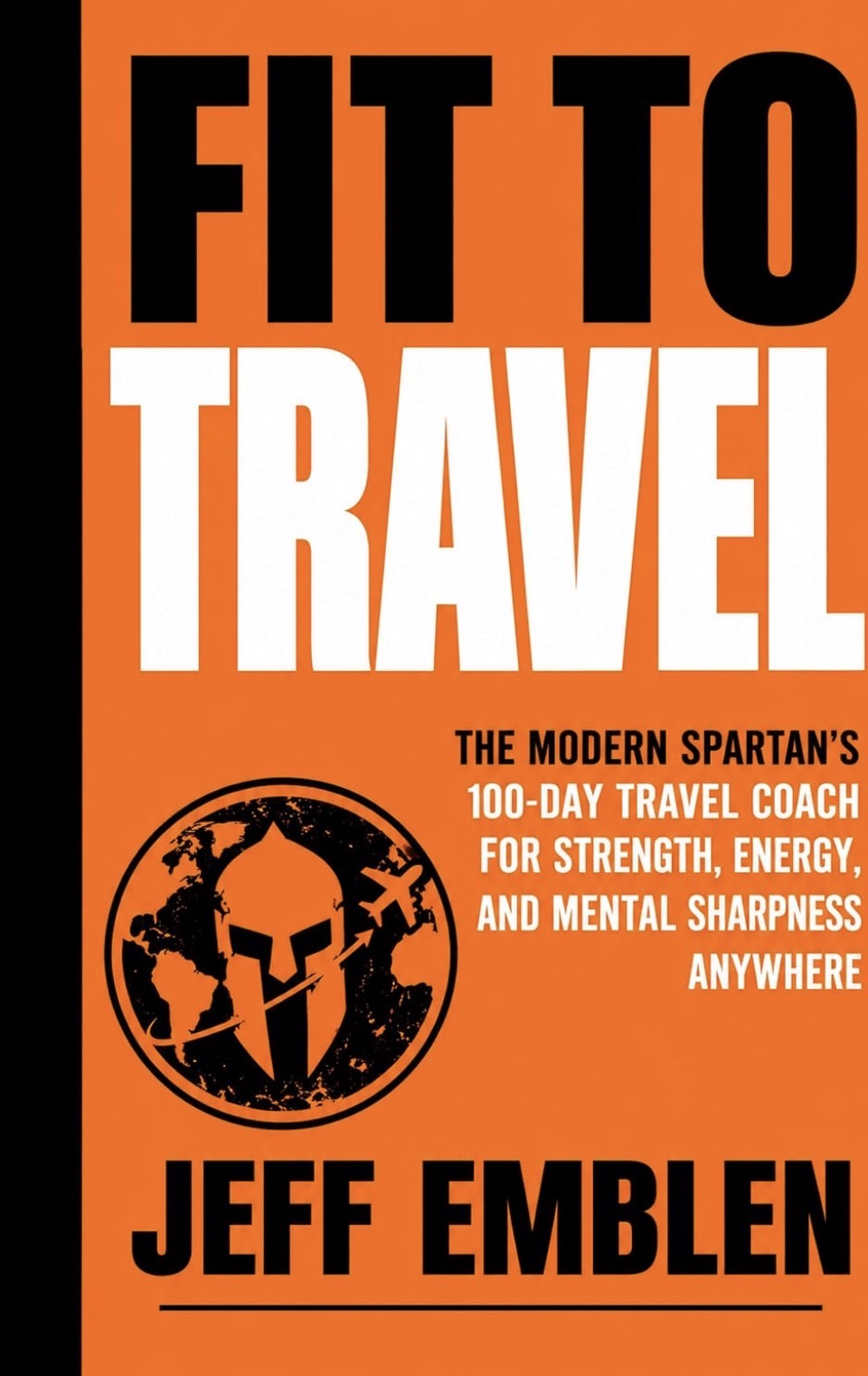
Then download the free Fit to Travel 100-Day Companion. It includes travel workouts, hotel-gym substitutions, a trip planner, training log, weekly scorecard, and checkpoints for turning the plan into a repeatable system.
Fit to Travel is coming this week. Stay tuned for launch details! You can view the current book information on the Lean by Habit Books page.
Research and further reading
- Lopes et al.: Elastic resistance versus conventional resistance for muscular strength
- American College of Sports Medicine: Updated resistance-training guidance
- Lean by Habit: Resistance Band Training for Travel
- Lean by Habit: Travel Fatigue vs. Jet Lag
This article is for general education and is not individualized medical advice. Consider your health, experience, surroundings, and equipment condition before exercising.

Leave a Reply