
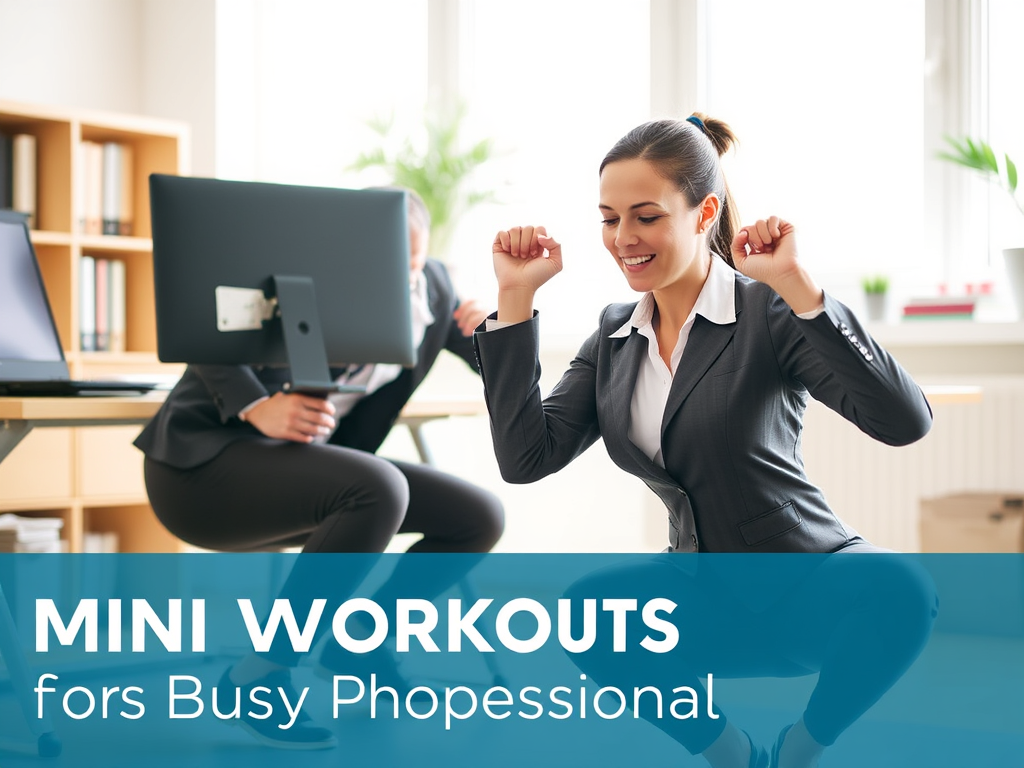
In today’s fast-paced world, finding time to work out can feel impossible—especially for busy professionals who juggle demanding work schedules, family obligations, and personal commitments. The good news is that staying fit doesn’t require hours at the gym. Enter mini workouts: short, effective bursts of exercise that fit seamlessly into even the busiest of days.
What Are Mini Workouts?
Mini workouts are short, high-intensity exercise sessions that usually last between 5 to 15 minutes. Unlike traditional workouts that might require lengthy gym sessions or elaborate routines, mini workouts focus on providing quick, efficient exercises that maximize impact in minimal time.
These workouts are typically designed around bodyweight exercises, such as squats, push-ups, lunges, or planks, meaning they can be done anywhere—at home, in the office, or even on the go.
The Science Behind Mini Workouts
Behavioral science offers a compelling explanation for why mini workouts are so effective. At the core, they align with the principles of habit formation and cognitive load management.
-
Breaking Down Barriers to Action: According to behavioral science, the key to starting and sticking with a habit is making it as easy as possible to begin. Busy professionals often face the barrier of “time” when it comes to exercise. Mini workouts address this by reducing the time commitment, making exercise feel like a small, achievable task that fits into a hectic schedule.
-
Instant Rewards: Research shows that behaviors linked to immediate rewards are more likely to stick. With mini workouts, the immediate benefits are clear: you feel more energized, your mood improves, and you’ve accomplished something positive for the day—all in just a few minutes. This instant gratification encourages consistency, which is key for habit formation.
-
Building Consistency: The cue-routine-reward loop, a fundamental principle in habit formation, can be easily applied to mini workouts. The “cue” could be a reminder on your phone or the habit of sitting at your desk for long periods. The “routine” is the mini workout (e.g., 5 minutes of squats), and the “reward” is the sense of accomplishment and improved energy levels.
Real-Life Examples of Busy Professionals Using Mini Workouts
Example 1: The Executive Who Works From Home
Meet Sarah, a senior manager who works from home. Her days are filled with Zoom meetings, emails, and conference calls. Sarah struggled with staying active throughout the day, but after reading about the benefits of mini workouts, she decided to incorporate short exercise breaks into her routine. Now, every hour, she does a quick 5-minute bodyweight workout—whether it’s a set of push-ups, planks, or jump squats. By the end of the day, Sarah has completed 20-30 minutes of exercise without feeling overwhelmed. This consistency helps her stay fit and reduces stress, improving her productivity at work.
Example 2: The Corporate Lawyer on a Tight Schedule
Tom is a corporate lawyer who spends long hours in courtrooms and client meetings. He often skips workouts because he can’t find the time to hit the gym. Instead, Tom uses his lunch break to do a 10-minute workout in his office. During his lunch hour, he does a series of exercises like lunges, chair dips, and stair sprints. These quick bursts of activity boost his energy and focus, helping him power through the second half of his day. Mini workouts fit perfectly into his hectic schedule, allowing him to stay active without disrupting his professional commitments.
Example 3: The Entrepreneur with a Non-Stop Schedule
Jessica, a startup founder, often finds herself glued to her desk, managing meetings and overseeing multiple projects. Her work schedule leaves little time for the gym, but she knows the importance of staying healthy. Jessica incorporates mini workouts into her daily routine by taking five-minute movement breaks throughout the day. These might involve stretching, a few squats, or quick yoga poses. These mini sessions allow her to recharge mentally and physically without losing focus or productivity.
Why Mini Workouts Work for Busy Professionals
-
Time-Efficiency: The biggest advantage of mini workouts is that they take little time but still deliver significant health benefits. According to research, short, intense exercise sessions can improve cardiovascular health, increase strength, and boost mood. This makes mini workouts ideal for those who want to stay fit but don’t have the luxury of spending hours at the gym.
-
Flexibility: With no special equipment or set schedule, mini workouts can be done anytime and anywhere. Whether at the office, at home, or even while traveling, mini workouts can be adapted to fit your environment.
-
Increased Energy and Focus: Short bursts of physical activity help increase blood flow, which provides a quick energy boost. Studies show that physical movement improves cognitive function, making mini workouts especially helpful for maintaining focus during long, mentally taxing workdays.
-
Improved Mood: Exercise is proven to boost mood and reduce stress levels. Even a brief workout can help release endorphins—chemicals in the brain that promote a sense of well-being. For busy professionals, this can combat feelings of burnout and anxiety.
-
Building a Long-Term Habit: Once you’ve successfully incorporated mini workouts into your daily routine, they become a habit. And as you continue to see the benefits of improved health, energy, and mood, the habit will stick. Behavioral science suggests that consistency, not intensity, is the key to lasting results.
How to Get Started with Mini Workouts
-
Start Small: Choose one exercise, like push-ups or squats, and aim to do it for 5 minutes a day. As you build consistency, you can increase the duration or add variety.
-
Set a Timer: To make it easy, set a timer for 5-10 minutes during your workday to commit to the mini workout. You can use this time for stretching, bodyweight exercises, or even a quick walk around the block.
-
Make It Convenient: Keep your workout space clear and ready to go. This could be a mat in the corner of your office or your living room, so you’re ready to jump into action.
-
Incorporate It into Your Routine: Attach your mini workouts to another established habit, like after checking emails or following a lunch break. This pairing helps reinforce the habit over time.
Final Thoughts
Mini workouts are not just a trend—they’re a sustainable, science-backed way for busy professionals to stay fit without disrupting their work or personal lives. By incorporating short bursts of exercise throughout the day, you can improve your physical health, increase your energy, and enhance your mental focus. So, if you’re struggling to find time for exercise, give mini workouts a try—they may be the solution you’ve been looking for.
In today’s fast-paced world, finding time to work out can feel impossible—especially for busy professionals who juggle demanding work schedules, family obligations, and personal commitments. The good news is that staying fit doesn’t require hours at the gym. Enter mini workouts: short, effective bursts of exercise that fit seamlessly into even the busiest of days.
What Are Mini Workouts?
Mini workouts are short, high-intensity exercise sessions that usually last between 5 to 15 minutes. Unlike traditional workouts that might require lengthy gym sessions or elaborate routines, mini workouts focus on providing quick, efficient exercises that maximize impact in minimal time.
These workouts are typically designed around bodyweight exercises, such as squats, push-ups, lunges, or planks, meaning they can be done anywhere—at home, in the office, or even on the go.
The Science Behind Mini Workouts
Behavioral science offers a compelling explanation for why mini workouts are so effective. At the core, they align with the principles of habit formation and cognitive load management.
-
Breaking Down Barriers to Action: According to behavioral science, the key to starting and sticking with a habit is making it as easy as possible to begin. Busy professionals often face the barrier of “time” when it comes to exercise. Mini workouts address this by reducing the time commitment, making exercise feel like a small, achievable task that fits into a hectic schedule.
-
Instant Rewards: Research shows that behaviors linked to immediate rewards are more likely to stick. With mini workouts, the immediate benefits are clear: you feel more energized, your mood improves, and you’ve accomplished something positive for the day—all in just a few minutes. This instant gratification encourages consistency, which is key for habit formation.
-
Building Consistency: The cue-routine-reward loop, a fundamental principle in habit formation, can be easily applied to mini workouts. The “cue” could be a reminder on your phone or the habit of sitting at your desk for long periods. The “routine” is the mini workout (e.g., 5 minutes of squats), and the “reward” is the sense of accomplishment and improved energy levels.

Real-Life Examples of Busy Professionals Using Mini Workouts
Example 1: The Executive Who Works From Home
Meet Sarah, a senior manager who works from home. Her days are filled with Zoom meetings, emails, and conference calls. Sarah struggled with staying active throughout the day, but after reading about the benefits of mini workouts, she decided to incorporate short exercise breaks into her routine. Now, every hour, she does a quick 5-minute bodyweight workout—whether it’s a set of push-ups, planks, or jump squats. By the end of the day, Sarah has completed 20-30 minutes of exercise without feeling overwhelmed. This consistency helps her stay fit and reduces stress, improving her productivity at work.
Example 2: The Corporate Lawyer on a Tight Schedule
Tom is a corporate lawyer who spends long hours in courtrooms and client meetings. He often skips workouts because he can’t find the time to hit the gym. Instead, Tom uses his lunch break to do a 10-minute workout in his office. During his lunch hour, he does a series of exercises like lunges, chair dips, and stair sprints. These quick bursts of activity boost his energy and focus, helping him power through the second half of his day. Mini workouts fit perfectly into his hectic schedule, allowing him to stay active without disrupting his professional commitments.
Example 3: The Entrepreneur with a Non-Stop Schedule
Jessica, a startup founder, often finds herself glued to her desk, managing meetings and overseeing multiple projects. Her work schedule leaves little time for the gym, but she knows the importance of staying healthy. Jessica incorporates mini workouts into her daily routine by taking five-minute movement breaks throughout the day. These might involve stretching, a few squats, or quick yoga poses. These mini sessions allow her to recharge mentally and physically without losing focus or productivity.
Why Mini Workouts Work for Busy Professionals
-
Time-Efficiency: The biggest advantage of mini workouts is that they take little time but still deliver significant health benefits. According to research, short, intense exercise sessions can improve cardiovascular health, increase strength, and boost mood. This makes mini workouts ideal for those who want to stay fit but don’t have the luxury of spending hours at the gym.
-
Flexibility: With no special equipment or set schedule, mini workouts can be done anytime and anywhere. Whether at the office, at home, or even while traveling, mini workouts can be adapted to fit your environment.
-
Increased Energy and Focus: Short bursts of physical activity help increase blood flow, which provides a quick energy boost. Studies show that physical movement improves cognitive function, making mini workouts especially helpful for maintaining focus during long, mentally taxing workdays.
-
Improved Mood: Exercise is proven to boost mood and reduce stress levels. Even a brief workout can help release endorphins—chemicals in the brain that promote a sense of well-being. For busy professionals, this can combat feelings of burnout and anxiety.
-
Building a Long-Term Habit: Once you’ve successfully incorporated mini workouts into your daily routine, they become a habit. And as you continue to see the benefits of improved health, energy, and mood, the habit will stick. Behavioral science suggests that consistency, not intensity, is the key to lasting results.
How to Get Started with Mini Workouts
-
Start Small: Choose one exercise, like push-ups or squats, and aim to do it for 5 minutes a day. As you build consistency, you can increase the duration or add variety.
-
Set a Timer: To make it easy, set a timer for 5-10 minutes during your workday to commit to the mini workout. You can use this time for stretching, bodyweight exercises, or even a quick walk around the block.
-
Make It Convenient: Keep your workout space clear and ready to go. This could be a mat in the corner of your office or your living room, so you’re ready to jump into action.
-
Incorporate It into Your Routine: Attach your mini workouts to another established habit, like after checking emails or following a lunch break. This pairing helps reinforce the habit over time.

Final Thoughts
Mini workouts are not just a trend—they’re a sustainable, science-backed way for busy professionals to stay fit without disrupting their work or personal lives. By incorporating short bursts of exercise throughout the day, you can improve your physical health, increase your energy, and enhance your mental focus. So, if you’re struggling to find time for exercise, give mini workouts a try—they may be the solution you’ve been looking for.
In today’s fast-paced world, finding time to work out can feel impossible—especially for busy professionals who juggle demanding work schedules, family obligations, and personal commitments. The good news is that staying fit doesn’t require hours at the gym. Enter mini workouts: short, effective bursts of exercise that fit seamlessly into even the busiest of days.
What Are Mini Workouts?
Mini workouts are short, high-intensity exercise sessions that usually last between 5 to 15 minutes. Unlike traditional workouts that might require lengthy gym sessions or elaborate routines, mini workouts focus on providing quick, efficient exercises that maximize impact in minimal time.
These workouts are typically designed around bodyweight exercises, such as squats, push-ups, lunges, or planks, meaning they can be done anywhere—at home, in the office, or even on the go.
The Science Behind Mini Workouts
Behavioral science offers a compelling explanation for why mini workouts are so effective. At the core, they align with the principles of habit formation and cognitive load management.
-
Breaking Down Barriers to Action: According to behavioral science, the key to starting and sticking with a habit is making it as easy as possible to begin. Busy professionals often face the barrier of “time” when it comes to exercise. Mini workouts address this by reducing the time commitment, making exercise feel like a small, achievable task that fits into a hectic schedule.
-
Instant Rewards: Research shows that behaviors linked to immediate rewards are more likely to stick. With mini workouts, the immediate benefits are clear: you feel more energized, your mood improves, and you’ve accomplished something positive for the day—all in just a few minutes. This instant gratification encourages consistency, which is key for habit formation.
-
Building Consistency: The cue-routine-reward loop, a fundamental principle in habit formation, can be easily applied to mini workouts. The “cue” could be a reminder on your phone or the habit of sitting at your desk for long periods. The “routine” is the mini workout (e.g., 5 minutes of squats), and the “reward” is the sense of accomplishment and improved energy levels.
Real-Life Examples of Busy Professionals Using Mini Workouts
Example 1: The Executive Who Works From Home
Meet Sarah, a senior manager who works from home. Her days are filled with Zoom meetings, emails, and conference calls. Sarah struggled with staying active throughout the day, but after reading about the benefits of mini workouts, she decided to incorporate short exercise breaks into her routine. Now, every hour, she does a quick 5-minute bodyweight workout—whether it’s a set of push-ups, planks, or jump squats. By the end of the day, Sarah has completed 20-30 minutes of exercise without feeling overwhelmed. This consistency helps her stay fit and reduces stress, improving her productivity at work.
Example 2: The Corporate Lawyer on a Tight Schedule
Tom is a corporate lawyer who spends long hours in courtrooms and client meetings. He often skips workouts because he can’t find the time to hit the gym. Instead, Tom uses his lunch break to do a 10-minute workout in his office. During his lunch hour, he does a series of exercises like lunges, chair dips, and stair sprints. These quick bursts of activity boost his energy and focus, helping him power through the second half of his day. Mini workouts fit perfectly into his hectic schedule, allowing him to stay active without disrupting his professional commitments.
Example 3: The Entrepreneur with a Non-Stop Schedule
Jessica, a startup founder, often finds herself glued to her desk, managing meetings and overseeing multiple projects. Her work schedule leaves little time for the gym, but she knows the importance of staying healthy. Jessica incorporates mini workouts into her daily routine by taking five-minute movement breaks throughout the day. These might involve stretching, a few squats, or quick yoga poses. These mini sessions allow her to recharge mentally and physically without losing focus or productivity.
Why Mini Workouts Work for Busy Professionals
-
Time-Efficiency: The biggest advantage of mini workouts is that they take little time but still deliver significant health benefits. According to research, short, intense exercise sessions can improve cardiovascular health, increase strength, and boost mood. This makes mini workouts ideal for those who want to stay fit but don’t have the luxury of spending hours at the gym.
-
Flexibility: With no special equipment or set schedule, mini workouts can be done anytime and anywhere. Whether at the office, at home, or even while traveling, mini workouts can be adapted to fit your environment.
-
Increased Energy and Focus: Short bursts of physical activity help increase blood flow, which provides a quick energy boost. Studies show that physical movement improves cognitive function, making mini workouts especially helpful for maintaining focus during long, mentally taxing workdays.
-
Improved Mood: Exercise is proven to boost mood and reduce stress levels. Even a brief workout can help release endorphins—chemicals in the brain that promote a sense of well-being. For busy professionals, this can combat feelings of burnout and anxiety.
-
Building a Long-Term Habit: Once you’ve successfully incorporated mini workouts into your daily routine, they become a habit. And as you continue to see the benefits of improved health, energy, and mood, the habit will stick. Behavioral science suggests that consistency, not intensity, is the key to lasting results.
How to Get Started with Mini Workouts
-
Start Small: Choose one exercise, like push-ups or squats, and aim to do it for 5 minutes a day. As you build consistency, you can increase the duration or add variety.
-
Set a Timer: To make it easy, set a timer for 5-10 minutes during your workday to commit to the mini workout. You can use this time for stretching, bodyweight exercises, or even a quick walk around the block.
-
Make It Convenient: Keep your workout space clear and ready to go. This could be a mat in the corner of your office or your living room, so you’re ready to jump into action.
-
Incorporate It into Your Routine: Attach your mini workouts to another established habit, like after checking emails or following a lunch break. This pairing helps reinforce the habit over time.
Final Thoughts
Mini workouts are not just a trend—they’re a sustainable, science-backed way for busy professionals to stay fit without disrupting their work or personal lives. By incorporating short bursts of exercise throughout the day, you can improve your physical health, increase your energy, and enhance your mental focus. So, if you’re struggling to find time for exercise, give mini workouts a try—they may be the solution you’ve been looking for.

💥 Ready to Transform Your Body — One Habit at a Time
Lean by Habit gives you a simple, proven system to build lasting fitness and nutrition habits — without relying on willpower.
👉 Grab your copy of Lean by Habit today on Amazon and take the first step toward a healthier, stronger you.

Share this:tdyt
- Click to share on Facebook (Opens in new window) Facebook
- Click to share on X (Opens in new window) X
- Click to share on WhatsApp (Opens in new window) WhatsApp
- Click to share on LinkedIn (Opens in new window) LinkedIn
- Click to email a link to a friend (Opens in new window) Email
- Click to print (Opens in new window) Print

Leave a Reply