
Table of Contents
- Introduction: Strong and Tireless
- What Is Hybrid Training?
- The Power of GPP: General Physical Preparedness
- Why Hybrid Training Works for Middle-Aged Adults
- Sample Weekly Hybrid Training Split
- Tips for Sustainable Success
- How Lean by Habit Can Help
- Key Takeaways
- Reference
1. Introduction: Strong and Tireless
As a former infantry soldier, I had to be ready for anything—scaling obstacles under heavy load one moment, sprinting across terrain the next. We couldn’t afford to specialize. We had to be strong, mobile, and endure. That’s why I train the way I do now—and why I coach others to do the same through Hybrid Training.
Today, as a fitness coach and author of Lean by Habit, I guide middle-aged men and women to build practical, high-performing bodies—ones that can chase kids, hike mountains, lift furniture, and fight off the creep of aging.
2. What Is Hybrid Training?
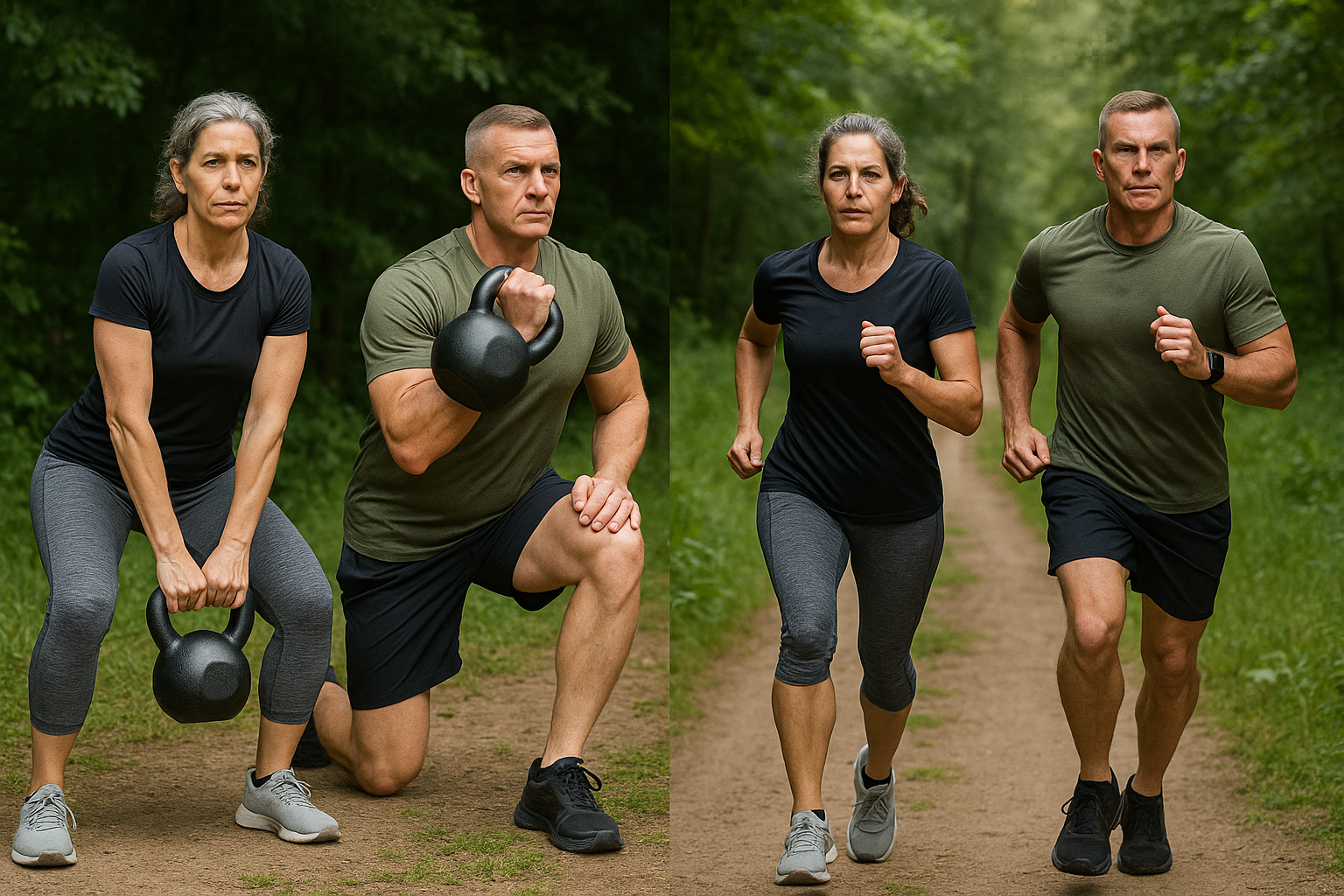
Hybrid training blends strength training and endurance training into one cohesive program. It’s not “either/or.” It’s both.
You’re not just a runner. You’re not just a lifter. You become the kind of person who can deadlift 300 pounds and run a 5K. This combination develops:
- Strength and power
- Cardiovascular endurance
- Metabolic flexibility
- Fat loss and muscle preservation
“The hybrid athlete is capable in all domains—not just surviving, but thriving.”
3. The Power of GPP: General Physical Preparedness
General Physical Preparedness (GPP) is the foundation of hybrid training. GPP means being ready for anything life throws your way—carrying groceries, moving furniture, sprinting to catch a flight, or handling unexpected emergencies.
Hybrid training builds your GPP by:
- Training multiple energy systems
- Preparing joints, tendons, and muscles across varied movements
- Reducing risk of overuse injuries
- Promoting both physical capacity and resilience
Studies show that combined training enhances VO2 max and strength without compromise when properly programmed (Jones et al., 2013; Fyfe et al., 2014).
4. Why Hybrid Training Works for Middle-Aged Adults
After 40, our bodies change. Muscle loss accelerates. Recovery slows. But with the right strategy, we can fight back—and even thrive.
Benefits of Hybrid Training for Adults 40+:
- Increased energy and stamina for work, family, and play
- Muscle retention and bone density support
- Improved heart health and blood sugar regulation
- Fat loss without crash diets
- Mental resilience through challenging training
And perhaps most importantly: it’s functional. You’re not training for the gym—you’re training for life.
5. Sample Weekly Hybrid Training Split
Here’s a simple weekly structure to build strength and stamina:
| Day | Focus |
|---|---|
| Monday | Strength (Full Body) + Walk |
| Tuesday | Conditioning (Zone 2 or HIIT) |
| Wednesday | Strength (Upper Body) + Core |
| Thursday | Steady State Cardio (Bike, Run, Ruck) |
| Friday | Strength (Lower Body) + Mobility |
| Saturday | Hybrid Circuit (e.g., kettlebell + sprints) |
| Sunday | Rest or Light Active Recovery |
6. Tips for Sustainable Success
- 🏋️ Lift heavy enough to challenge you, but not wreck you.
- 🏃 Run, ruck, or cycle at a pace you can maintain a conversation (Zone 2) for endurance.
- 📈 Progress gradually. Track your lifts and pace.
- 🥗 Fuel your body. Prioritize protein and whole foods.
- 😴 Sleep 7–9 hours per night.
- 🔄 Cycle intensity. Mix hard and easy weeks.
7. How Lean by Habit Can Help
If you’re over 40 and feel like your fitness has stalled, Lean by Habit was written for you. We help you:
- Build habits that stick
- Lose weight sustainably
- Improve strength, endurance, and energy
- Fit fitness into real life—not just ideal life
You can download a free copy of the Lean by Habit Field Manual here and begin your hybrid journey today.
Also check out:
- 5-Day GPP Workout Plan for Total Fitness
- Mini Workouts: 10 Movements to Stay Fit When Busy
- Zone 2 Training for Beginners
- Strength Without Burnout
8. Key Takeaways
- Hybrid training combines strength and endurance for well-rounded fitness.
- It improves GPP, preparing you for life’s unpredictable demands.
- Middle-aged adults benefit through increased energy, fat loss, and resilience.
- Sustainability matters—train smart, not just hard.
- Programs like Lean by Habit offer structure and support.
9. References
- Jones, T. W., Howatson, G., Russell, M., & French, D. N. (2013). “Performance and physiological responses to repeated sprint training in elite rugby union players.” International Journal of Sports Physiology and Performance.
- Fyfe, J. J., Bishop, D. J., & Stepto, N. K. (2014). “Interference between concurrent resistance and endurance exercise: molecular bases and the role of individual training variables.” Sports Medicine.
- NSCA Journal of Strength and Conditioning Research (2020). “Training Over 40: What We Know About Lifespan Adaptations.”
- American Heart Association (2023). “Physical Activity Recommendations for Adults and Older Adults.”

Leave a Reply