
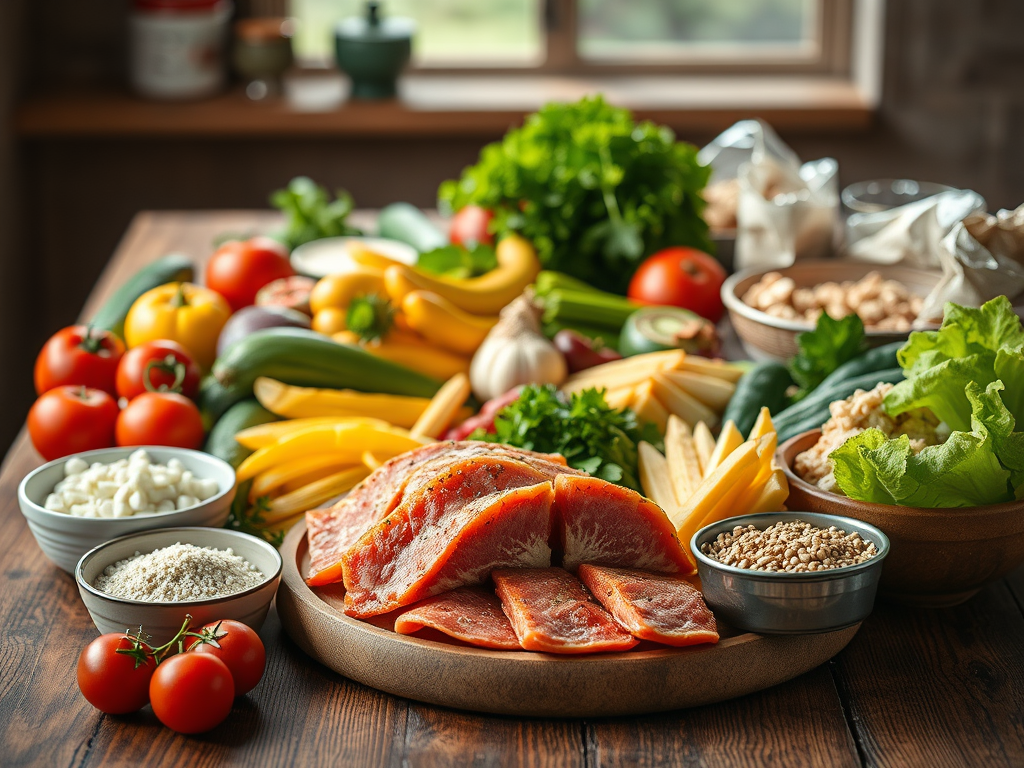
Despite all the misinformation out there, losing weight is simple. You don’t need a new diet to lose weight. You need to cut your caloric intake by approximately twenty percent. You need to eat fewer calories than you burn.
FOCUS ON STRATEGIES THAT HELP YOU CONTROL YOUR APPETITE
The reason the diet pill Ozempic works is that it decreases appetite. It mimics the hormone glucagon-like peptide-1 (GLP-1), which is released by the body after eating. This helps the brain understand that you’re full, which suppresses appetite. It also slows down how quickly food moves through the digestive tract, which can help you feel full for longer. Lastly, it improves insulin sensitivity by moving glucose from the blood into cells to be used as energy.
If you are obese, I recommend you discuss taking Ozempic with your primary care physician. Some see using diet pills as cheating, but I do not. You should use whatever tools are available to bolster your willpower and reign in your cravings. I also recommend getting adequate sleep, at least seven hours each night, because it helps us control our appetite by decreasing our cravings. I also advocate daily exercise because it improves self-control and insulin sensitivity.

THE IMPORTANCE OF INSULIN SENSITIVITY
I believe insulin sensitivity is one of the most underrated and least understood factors in weight loss and our overall health. Insulin sensitivity measures how well your body responds to insulin, a hormone that regulates blood sugar levels. When your body is insulin-sensitive, it can effectively use insulin to move glucose (sugar) from your bloodstream into your cells for energy. However, when your body becomes less sensitive to insulin, this can lead to high blood sugar levels and an increased risk of developing type 2 diabetes and other more serious medical conditions.
Longevity expert Doctor Peter Attia says, “Studies have found that insulin resistance itself is associated with huge increases in one’s risk of cancer (up to twelvefold), Alzheimer’s disease (fivefold), and death from cardiovascular disease (almost sixfold). In his book Outlive: The Science and Art of Longevity, he hypothesizes that insulin sensitivity is the key to living a longer, better life.
If you choose to take Ozempic, it is especially important that you do some strength training to prevent muscle loss. Rapid weight loss from taking Ozempic can lead to muscle loss. It can also lead to a decrease in bone density. Strength training will prevent both of these conditions and allow you to finish your diet looking leaner and stronger.

WHY YOU SHOULD KEEP A FOOD LOG
The first reason is that you will lose a lot more weight, as demonstrated by numerous studies. For example, a 2009 weight loss study found that participants who were asked to log their food lost twice as much weight as those who didn’t.[i] Another study with nearly 1700 participants came to the same conclusion, “Those who kept daily food records lost twice as much weight as those who kept no records.”[ii] Jack Hollis, Ph.D., says, “It seems that the simple act of writing down what you eat encourages people to consume fewer calories.”
5 THINGS YOU SHOULD KNOW ABOUT FOOD TRACKING:
- The more you track, the more likely you will reach your goal.
- You can start building the habit of tracking by logging one meal at a time.
- Tracking gets easier the more you do it.
- It is always better to track something versus nothing at all.
- Pick something similar if you cannot find an exact match for what you want to track.
Logging is really easy with apps like MyFitnessPal. You discover it is actually liberating because when you log your food, it allows you to eat whatever you want, within reason. You can make room for indulgences; just don’t overdo it. I recommend keeping your treats to no more than 20% of your daily caloric intake. For example, if you are losing weight at 1,700 calories a day, I wouldn’t allocate more than 340 calories a day for indulgences, like treats and alcohol. You can occasionally exceed this recommendation, but remember, we don’t just want to lose weight. We want to develop healthy eating habits to nourish our bodies and give us sustained energy.
Logging your food for a couple of months will not only help you lose approximately eight to sixteen pounds of body weight, it will develop into a habitual way of eating. You’ll be more aware of how many calories foods contain and what serving size is appropriate for you.
You’ll start making better eating decisions. You’ll identify patterns and remove unhealthy foods from your environment, replacing them with healthier, less processed alternatives. Eventually, you will transition from logging your meals to planning them. As you begin to see results, you might be encouraged to start exercising because we do better when we feel better, and nothing makes us feel better than progress.
Keeping a food journal might seem like a hassle, but it isn’t. Focus on recording one item at a time to reduce your subjective fatigue. Everything is easier when you focus on taking the next step. The great news is that logging gets easier and easier the more you do it. There will be a slight learning curve initially, but in just a couple of days, you’ll be over the hump. In a couple of weeks, it will take you less than 5 minutes.
The next step is to determine your daily caloric intake using the MyFitnessPal app. It’s my go-to app due to its ease of use, colossal food library, and affordability. The FREE version of the app will give you all the functionality you need to lose weight at a predictable pace.
The app makes creating a caloric deficit easier than ever. Download the app to your smartphone. Sign in using your Facebook account or an email account. Next, the app will ask you your goal: lose weight, maintain weight, or gain weight. You will enter your level of activity based on your occupation, not your exercise program. You enter your height, weight, and sex.
After entering all your data, MyFitnessPal will calculate your daily caloric intake to achieve your goal. I suggest you further adjust your diet by adjusting your macronutrients (macros). Press the More icon located in the bottom right-hand corner of the home screen and select Goals. The MORE button is displayed as three dots (…). From the Goal menu, select Calories & Macronutrients. I recommend a 40% carbohydrate, 35% protein, and 25% fat diet for those with a healthy metabolism. If you are insulin-resistant, I suggest limiting your calories from carbohydrates to 30% or less of your total calories. You can find many YouTube videos that will show you how to adjust your macro goals to hit your desired percentages.
As you log your food on the MyFitnessPal app, it will calculate your remaining calories for the day. Click on the Calories Remaining at the top of your daily food diary, and it will show your macronutrients on a pie chart, along with the percentages and total grams of each macronutrient.
Your goal for daily protein intake should be approximately 1 gram per pound of lean body mass or ideal body weight. A 200-pound male with 30% body fat would want to consume roughly 140 grams of protein a day. Adjust your macros based on your preferences, but avoid allowing your daily protein intake to fall too much below one gram per pound of lean body mass. If you hit 80% of your target, that should be good enough.
Now that you have set up your profile, all that is left to do is log everything you eat. I suggest you start recording your breakfast because most of us eat the same breakfast every day. Most food items have a bar code.
The premium version of the MyFitnessPal app lets you add these foods by scanning the bar code. You select the Add button, Food, select Breakfast, and hit the Bar Code scanner symbol in the upper right-hand corner of the home page.
MEAL PLANNING IS THE NEXT LOGICAL STEP
After you have been logging your food for a few weeks, transitioning to food planning is as simple as logging everything you will eat ahead of time. Use what you have learned from logging your food to plan out your meals to create a balanced diet that produces a caloric deficit. Meal planning develops a daily eating routine that, over time, will become a habitual way of eating.
Goal setting and vision boards get a lot of attention, but everyone has goals. What separates successful people from unsuccessful ones is not their goals; it is their habits. Develop daily routines that support your goals, and you will be much further along than someone who stares at their vision board every day.
Herculean efforts and overly restrictive diets make for viral videos, but they do not build great bodies. Meal plans and punch-the-clock workouts do. Preparation is the key. Having healthy meals ready to go when hunger hits at the end of an exhausting day is crucial. In an exhausted state, we don’t typically rise to the occasion. We tend to fall to the level of our preparation, so be prepared with meals ready to go.
If I can help you, please email me at LeanByHabit@gmail.com.
Best wishes and best health!
Jeff
Subscribe to our Newsletter by visiting LeanByHabit.com and entering your email addresss at the bottom of the page.
[i] Lora E. Burke, PhD, MPH, FAHA, FAAN, Jing Wang, PhD, MPH, RN, Graduate Student Researcher, and Mary Ann Sevick, ScD, RN, Research Scientist, “Self-Monitoring in Weight Loss: A Systematic Review of the Literature,” J Am Diet Assoc. 2011 Jan: 111(1): 92-102. DOI: 10.1016/j.jada.2010.10.008.
[ii] Kaiser Permanente. “Keeping A Food Diary Doubles Diet Weight Loss, Study Suggests.” ScienceDaily. ScienceDaily, Jul 8, 2008.08.
My second book, Lean by Habit: A Bulletproof Plan for Body Transformation, is now available on Kindle and Paperback. Audible will be available in mid-October 2024. SAMPLE THE FIRST HOUR FOR FREE: leanbyhabit.com/wp-content/uploads/2024/03/LEAN-BY-HABIT-Better-1.m4a
My second book, Lean by Habit: A Bulletproof Plan for Body Transformation, is now available on Kindle and Paperback. Audible will be available in mid-September 2024. SAMPLE THE FIRST HOUR FOR FREE: leanbyhabit.com/wp-content/uploads/2024/03/LEAN-BY-HABIT-Better-1.m4a

Small Changes, Fantastic Results
If you are looking for a simple, common-sense approach to weight loss that creates a strong-firm body for life, Lean by Habit is it! It contains everything you need to get in great shape. You’ll have eight free downloadable training programs to choose from based on your goals, a flexible diet, a habit tracker scorecard, and other execution-focused materials to help you succeed.
Lean by Habit combines the best behavioral and exercise science to produce outstanding results through short-daily bouts of exercise. Fifteen minutes is all you need to start getting leaner, fitter, and stronger.
If you are motivated to improve how you look and feel, the time to act is NOW! Don’t give your motivation a chance to wane and your excuses time to talk you out of it. When it comes to improving your life, there is no place better to start than with your habits, and there is no better program than this one to help you do it.
Click HERE to get it delivered to your device and start taking those small steps that produce tremendous results. Act now before the book increases to its normal price of $9.99.
This book contains:
- The Three-Step Process for Behavior Change
- The Four Elements of Execution
- Eight Programs (with downloadable training logs)
- A Habit Tracker Weight Loss Scorecard
- A Flexible Diet



Leave a Reply